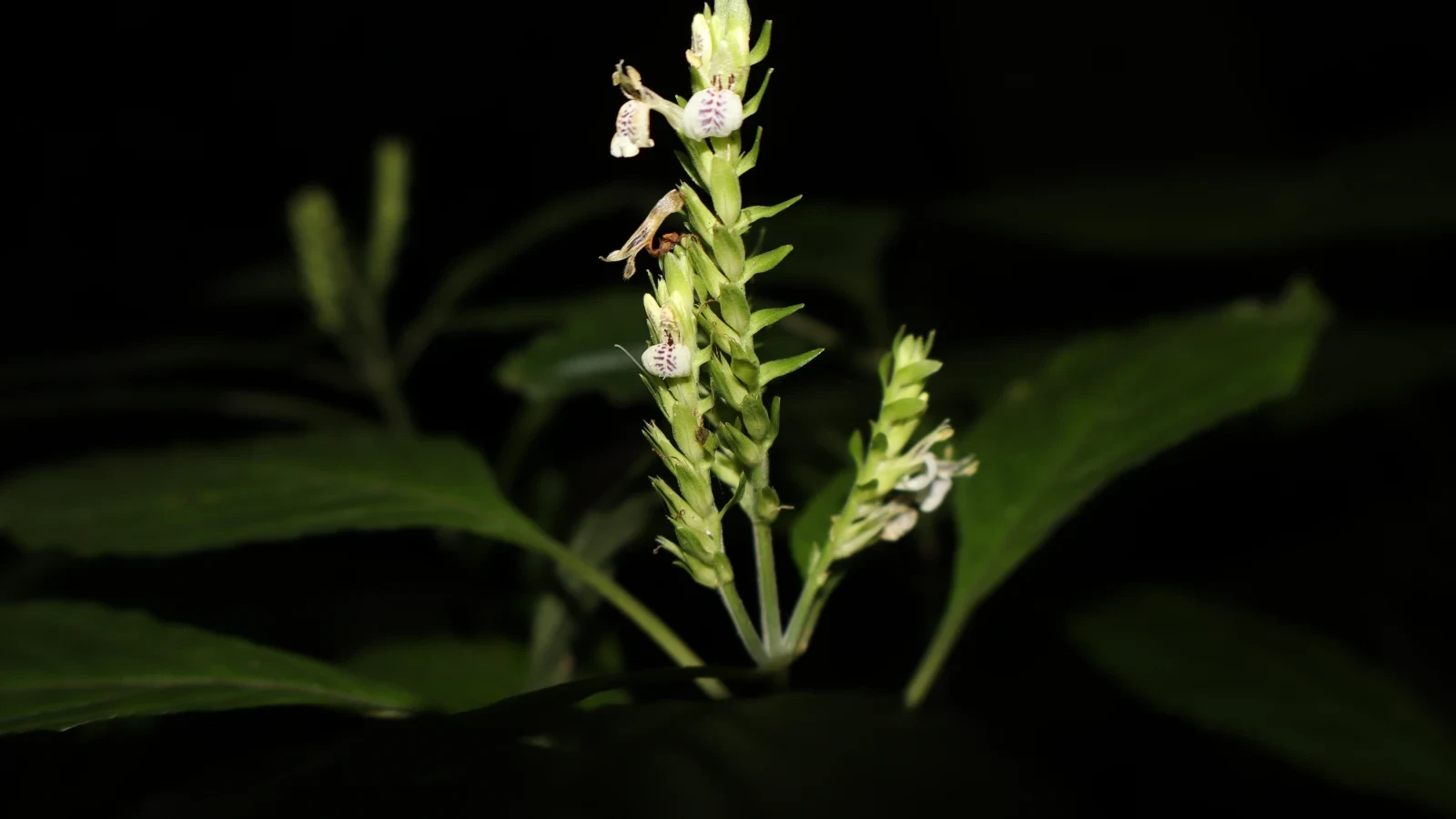
Botanists in Assam have announced a significant rediscovery, bringing back into scientific records a rare endemic flowering plant, Rungia mastersii, which had been missing for an astonishing 180 years. This remarkable find in the Jatinga Hills of Dima Hasao district provides researchers a crucial second opportunity to study and conserve a species once presumed lost.
The plant, known only from a single specimen collected by British botanist J.W. Masters in 1845, had remained unobserved and unrecorded since then. Its recent rediscovery, led by Kangkan Kumar Das and Debjyoti Bhattacharyya from Assam University, marks one of the most significant botanical achievements in Northeast India in recent memory.
During extensive field surveys, the researchers located a small, thriving population of Rungia mastersii. The plants were found growing on moist, shaded rocky slopes adjacent to a stream, at elevations ranging between 900 and 1,250 meters. This specific habitat provides vital clues for understanding the species' ecological requirements and planning future conservation strategies.
The findings of this rediscovery have been rigorously peer-reviewed and subsequently published in the international journal Feddes Repertorium, lending global scientific recognition to the feat. The genus Rungia Nees, part of the Acanthaceae family, encompasses 88 accepted species globally, primarily distributed across tropical Africa, tropical to subtropical Asia, and the southern Arabian Peninsula. Assam itself is home to four species within this genus: Rungia mastersii, R. pectinata, R. repens, and R. tinsukiaensis. The re-emergence of Rungia mastersii underscores the rich, yet often unexplored, biodiversity hidden within Assam's verdant landscapes.
Continue Reading