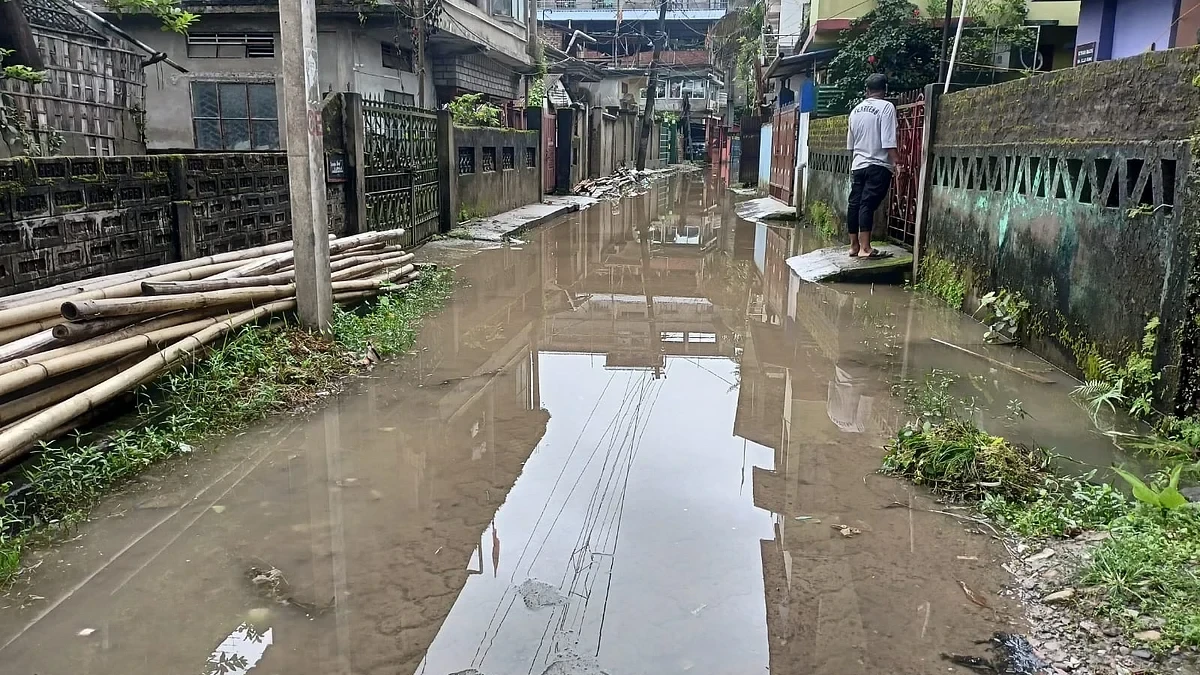
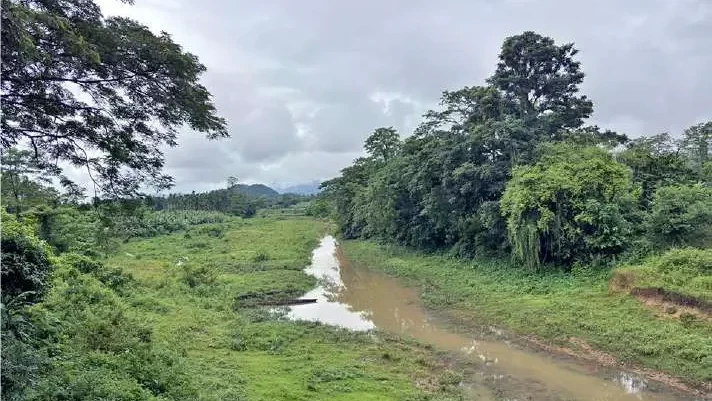
Amingaon, July 23: While many parts of Assam grapple with monsoon-related flooding, a starkly different crisis is unfolding along the Kulsi River. A critical 30-kilometer stretch of the river, extending from Kulsi village to Sapartari village, is rapidly drying up, posing an unprecedented threat to both human communities and endangered wildlife.
The dwindling water levels directly impact over 30,000 people, primarily fishermen and farmers, who depend on the river for their sustenance and livelihood. The situation has been exacerbated at the Kulsi river point, known locally as Duyomukh, where the river bifurcates. The eastern channel, historically known as Kukurmara, has seen a drastic reduction in water flow, further deepening the crisis for downstream communities.
Dhruba Narayan Das, president of the 3 No. Amtala Gaon Unnayan Somittee, described the current state as a "disaster-like situation." He lamented the dramatic change, stating, "The river, once abundant with magnificent fish diversity and home to endangered freshwater river dolphins, used to feed us." Das is actively leading a campaign to draw attention to the river's deterioration and advocate for its restoration.
In response to growing concerns from riverine villagers, an expert committee has reportedly been constituted. Its mandate includes thoroughly analyzing the underlying reasons for the river's degradation, developing strategies for the conservation of the freshwater dolphin population, and ensuring the long-term livelihood security of the local populace.
Continue Reading