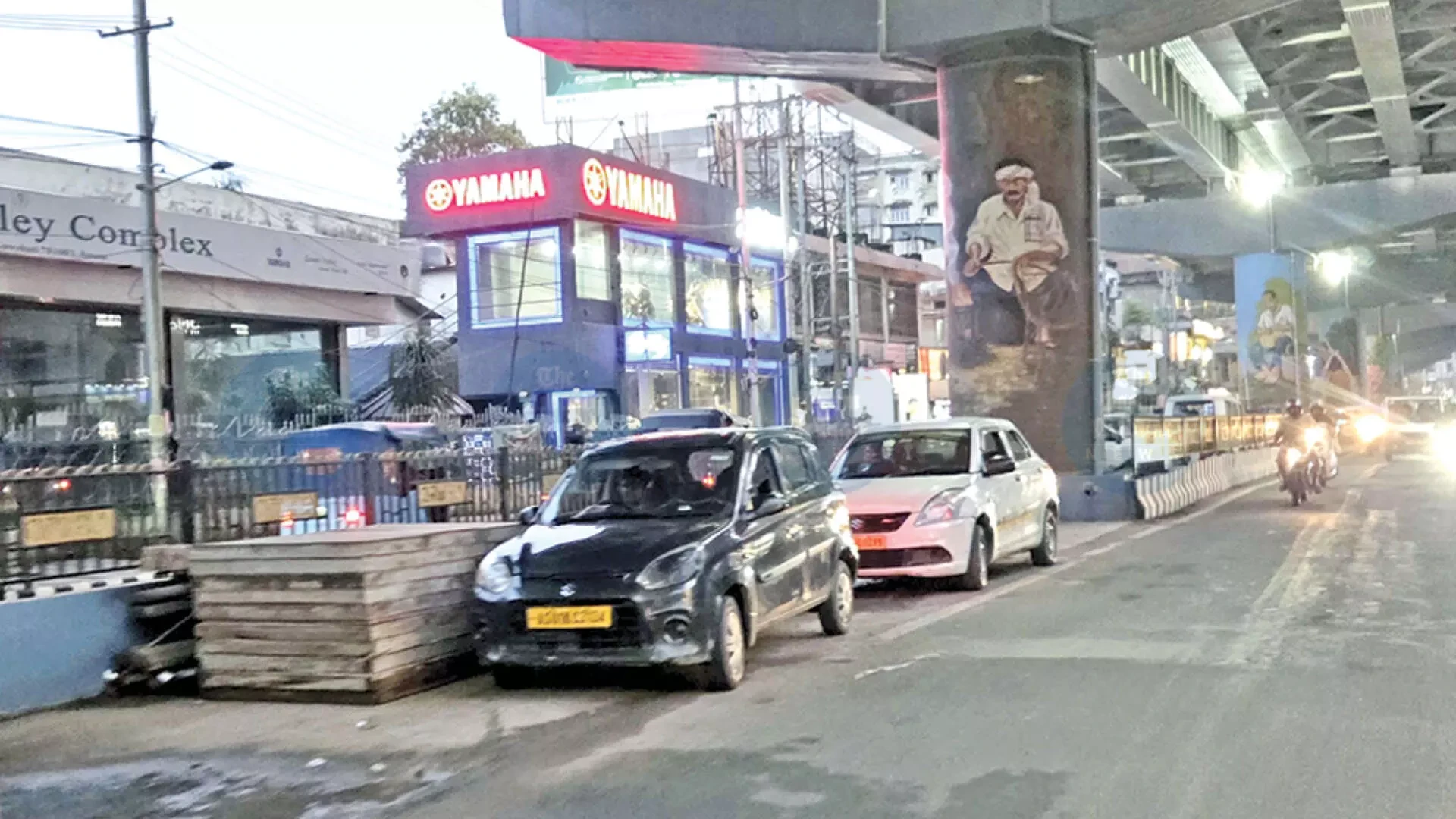
Guwahati, July 20: Beneath the city's bustling flyovers, a starkly different reality unfolds, far removed from the smooth flow of traffic above. Areas initially left vacant under these elevated roadways have progressively become unregulated zones, serving as unofficial parking spots, ad hoc business locations, and even temporary homes, raising serious concerns about urban planning and civic management.
Observations across several key flyovers, including those at Ulubari, Bhangagarh, Ganeshguri, Six Mile, and Maligaon, reveal a widespread pattern of disorganised use. These underbellies of the city are often characterised by heaps of garbage, encroaching informal setups, and private vehicles parked without oversight. In many instances, these spaces also provide shelter to homeless individuals and migrant workers, with visible signs such as bedding, mosquito nets, and personal belongings indicating their use as makeshift residences.
The lack of a consistent approach to managing these areas is evident, with some stretches seeing minimal intervention while others appear completely neglected. This unregulated transformation has led to a host of problems, including deteriorating sanitation, potential safety hazards due to poor lighting and unchecked activity, and widespread encroachment on public land. The current situation projects an unfavourable image of Guwahati, a rapidly developing urban centre.
A daily commuter in Ulubari voiced frustration, noting that the condition beneath the flyover creates a very poor impression of the city. The commuter highlighted the urgent need for proper maintenance and adequate lighting, particularly given the presence of vulnerable populations seeking shelter in these unmonitored zones. This sentiment reflects a broader public concern regarding the declining civic aesthetics and functionality of these critical urban spaces.
Addressing this growing challenge will require a concerted effort from civic authorities to implement uniform policies for the utilisation of spaces beneath flyovers, ensuring they contribute positively to the urban landscape rather than detracting from it.
Continue Reading