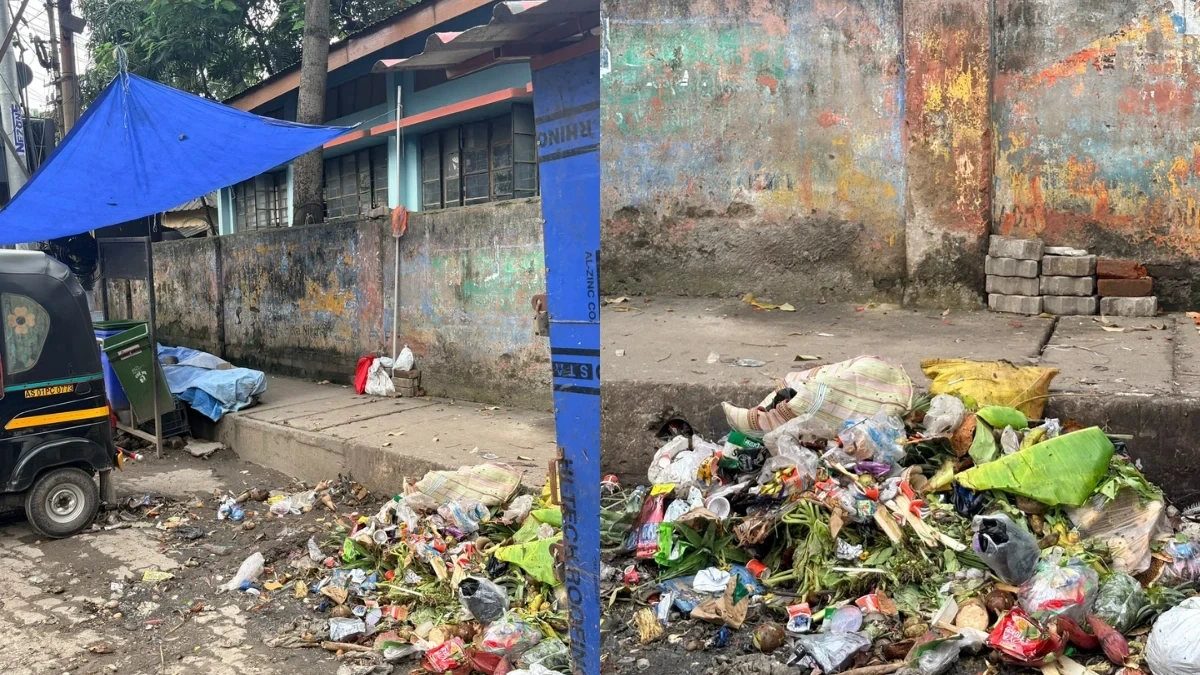
Guwahati's Kachari Basti is facing a persistent sanitation challenge, as mounds of garbage continue to accumulate on its streets, often right next to designated dustbins. This ongoing issue highlights a critical need for more effective waste management strategies by local authorities and improved civic responsibility among residents.
The sight of overflowing refuse, discarded alongside empty or underutilized bins, points to a breakdown in the waste disposal chain. Such conditions not only mar the aesthetic appeal of the locality but also pose significant public health risks, creating breeding grounds for vectors and contributing to environmental degradation in the urban heart of Assam.
While the provision of dustbins is a fundamental step towards urban cleanliness, their efficacy is compromised when they are either irregularly emptied or when residents opt to dispose of waste outside them. This scenario suggests a multifaceted problem that requires intervention from both the civic administration, ensuring timely collection and proper waste processing, and the community, through greater awareness and adherence to proper waste disposal practices.
Local authorities are tasked with maintaining sanitation standards, which includes not only providing infrastructure but also implementing public awareness campaigns and enforcing waste management regulations. Simultaneously, the onus is on citizens to utilize the provided facilities correctly and responsibly. Addressing this challenge in Kachari Basti will require a concerted effort, fostering a collaborative approach between the municipal body and its residents to achieve a cleaner, healthier urban environment.
Continue Reading