When India introduced excise duty reductions for vehicles measuring under four metres in overall length, engineers faced a tough packaging puzzle. Shaving boot length off traditional three-box sedans produced awkward proportions at first. The real breakthrough arrived when manufacturers applied that same sub-four-metre rule to high-riding utility vehicles. By combining a tall stance, short front and rear overhangs, and a wheel-at-each-corner footprint, the sub-compact crossover quickly became the default template for Indian family transport.
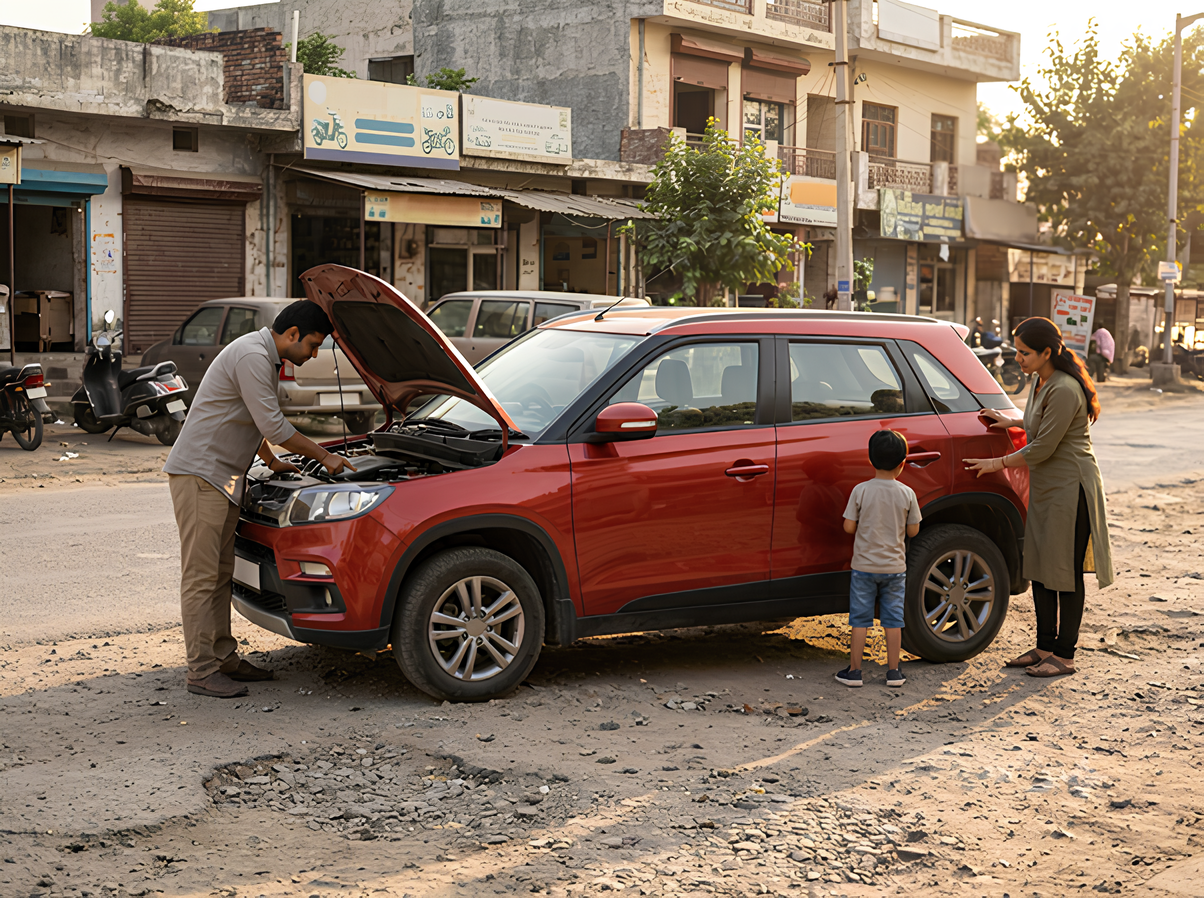
More than a decade after the segment first took off, early and mid-cycle examples of these crossovers form the backbone of the pre-owned market. For buyers navigating potholed municipal roads, flooded monsoon underpasses, and tight apartment parking slots, a compact crossover hits a practical middle ground. It occupies no more street space than a premium hatchback while offering the ground clearance and upright seating posture of a much larger utility vehicle.
Why Local Sourcing Simplifies the Pre-Owned Purchase
Shopping for a used vehicle involves balancing wider inventory choices against logistical convenience. While online classifieds allow buyers to browse listings across state borders, purchasing a car registered outside one's home state introduces administrative hurdles. Inter-state transfers require a No Objection Certificate from the originating Regional Transport Office, re-registration formalities, and road tax adjustments that can drag on for months.
Focusing the search on 2nd hand cars near me eliminates this bureaucratic friction. Inspecting vehicles within the same city or state registration zone allows a buyer to verify physical condition in person, bring along a trusted local mechanic, and complete the ownership transfer within the same transport jurisdiction. Local sourcing also gives clues about how the vehicle was used. A car driven in a dry inland city faces very different corrosion risks compared to one parked along a humid coastal belt, and local service records are far easier to cross-check with nearby authorised workshops.
The Engineering Behind the Original Compact Crossover Pioneer
Among the models that built the sub-four-metre SUV category in India, the Ford EcoSport occupies a special position. Launched in 2013 and produced domestically until late 2021, it established the blueprint for the segment before rival automakers fielded their own contenders. Unlike many modern crossovers that prioritise soft suspension tuning and oversized touchscreens, the EcoSport was engineered around a stiff boron-steel passenger cell, communicative steering, and taut body control.
Under the bonnet, the model was offered with four diverse powertrains across its production run. Early versions featured a 1.5-litre four-cylinder Ti-VCT petrol engine paired with either a five-speed manual or a six-speed dual-clutch automatic, alongside the acclaimed 1.0-litre three-cylinder EcoBoost turbocharged petrol motor. After the 2017 facelift, the naturally aspirated petrol unit transitioned to a 1.5-litre three-cylinder Dragon series engine producing roughly 122 PS, paired with a five-speed manual or a conventional six-speed torque-converter automatic. Throughout its lifecycle, the 1.5-litre four-cylinder TDCi turbo-diesel remained the high-mileage favourite, delivering 100 PS in later iterations with strong mid-range pull and consistent highway fuel economy.
What to Inspect Before Buying a Pre-Owned Example
Because Ford ended domestic manufacturing in 2021 while continuing spare parts and service support through its authorised network in India, buyers can acquire a well-built crossover at a price well below comparable newer rivals. Still, reviewing a comprehensive second hand Ford EcoSport buying guide helps prospective owners separate clean, well-kept examples from neglected ones.
When evaluating a specific vehicle on the ground, four mechanical areas deserve close scrutiny:
- Automatic Gearbox Variants: Pre-2017 petrol automatics used a dry-clutch six-speed PowerShift dual-clutch transmission, which can suffer from shuddering or actuator faults if driven heavily in stop-and-go traffic. Post-2017 facelift petrol automatics switched to a traditional six-speed torque converter, which is noticeably smoother and more reliable over high mileage.
- Tailgate Hinges and Rear Door Alignment: Because the heavy spare wheel mounts directly onto the side-hinged tailgate on most variants, check the door hinges and latch striker for sagging or rattling over broken roads.
- Cooling System on EcoBoost Models: The 1.0-litre turbo-petrol engine operates at high thermal loads. Verify that coolant levels are clean, hoses are pliable, and the water pump shows no signs of weeping.
- Suspension Bushes and Lower Arms: The stiff chassis setup relies on healthy front lower control arms and link rods. Listen for sharp knocking noises from the front axle when driving over speed breakers.
When a buyer finds an example with documented service intervals and original structural panels, a compact crossover from this era offers solid build quality and confident highway manners for a modest budget.