
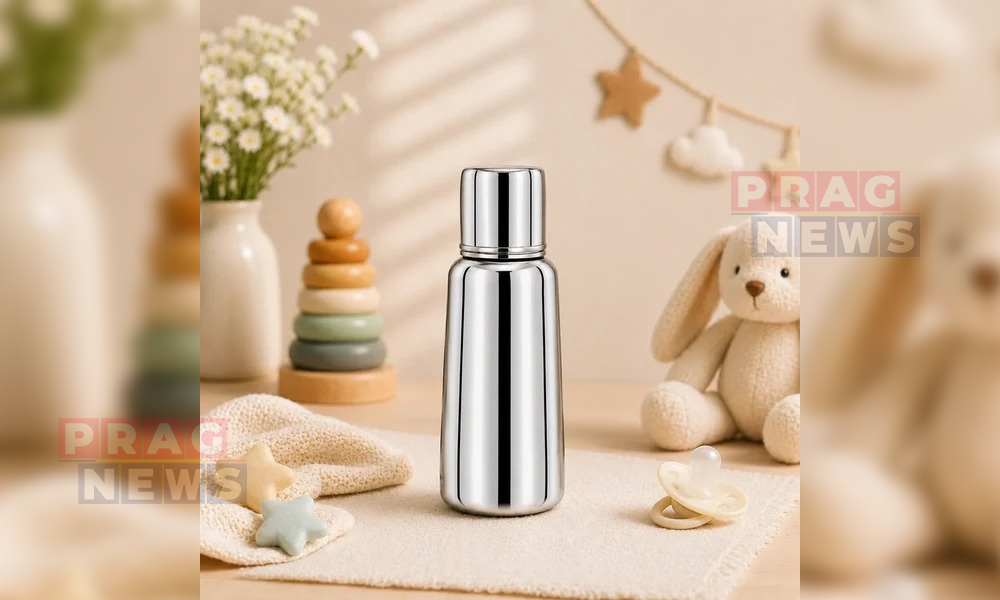
Choosing a feeding bottle sounds simple until you stand in a baby store, facing dozens of shapes, materials, nipple sizes, and anti-colic promises.
The right choice can mean calmer feeds, less gas and fewer sleepless nights, while the wrong one often leads to fussiness and frustration.
This guide walks you through feeding bottle types, the features that genuinely matter, and the cleaning habits that keep your baby safe.
Types of Feeding Bottles You Will Find
Every feeding bottle is built around a material, and that material decides its weight, durability, heat tolerance, and how easily it cleans.
Plastic Bottles
Polypropylene (PP) bottles are light, affordable and unbreakable, but they scratch and turn cloudy with time, so they need replacing more often. Polyphenylsulfone (PPSU) costs more, yet it handles frequent sterilizing far better and stays clear for longer, making it a sturdier everyday option.
Glass Bottles
Glass bottles do not absorb odors or stains and raise no chemical concerns, which is why many parents prefer them during the newborn months. They are heavier and can break, so a silicone sleeve is worth adding once your baby starts reaching for the bottle on their own.
Silicone Bottles
Food-grade silicone bottles feel soft and skin-like, tolerate high temperatures, and resist breaking, making them a premium choice for breastfed babies switching to bottles.
Anti-colic Bottles
Beyond material, design matters too, because anti-colic bottles use valves or vents to let air in without letting it reach your baby's tummy.
Key Features to Check Before You Buy
Once you settle on a material, these features decide whether a feeding bottle truly works for your baby or quietly gathers dust in the cupboard.
Verified Safety
Look for bottles free from Bisphenol A (BPA), ideally carrying Bureau of Indian Standards (BIS) marks or Food and Drug Administration (FDA) compliant materials. Even with the best feeding bottle brands, read the packaging carefully, because genuine certifications are printed clearly rather than vaguely implied.
Nipple Flow
Newborns need slow-flow nipples, and you can move to medium flow when your baby sucks hard, seems frustrated, or takes unusually long to finish.
Anti-colic Venting
Dual vents or valves reduce swallowed air, which helps babies prone to gas, spit-up, and evening fussiness feed more calmly and comfortably.
Right Capacity
A 120 to 150 ml bottle suits the newborn stage, while 240 to 260 ml bottles make more sense from around six months onwards.
Easy Cleaning
A wide neck, fewer detachable parts, and embossed measurement markings make daily washing quicker and keep the readings visible even after months of use.
In short, the best feeding bottle for newborns combines a slow-flow nipple, anti-colic venting, a small capacity and a material you trust completely.
How to Clean and Sterilize a Feeding Bottle
A clean feeding bottle protects your baby from harmful germs, because leftover milk residue quickly becomes a breeding ground in India's warm, humid weather.
Daily Washing Routine
Take the bottle apart completely, separating the nipple, ring, cap, and any vents, and rinse every part under running water immediately after feeding.
Wash each piece in hot, soapy water using a dedicated bottle brush, and squeeze water through the nipple hole to clear trapped milk.
Rinse thoroughly to remove soap residue, then let the parts air-dry on a clean rack instead of wiping them with a kitchen towel.
Sterilizing Methods
Boiling the parts for about five minutes remains the simplest method, though electric steam sterilizers offer more convenience for busy households with frequent feeds. Sterilize every new bottle before first use, and continue sterilizing at least once a day for babies under three months or born prematurely.
Care Tips for Homes
If you live in a hard-water area, an occasional soak in diluted vinegar removes white mineral deposits, followed by a thorough wash and rinse. Use boiled or purified water for both formula preparation and final rinsing whenever you are unsure about the quality of your tap supply. Replace nipples every two to three months, or sooner if they look thin, sticky, cracked, or swollen, and discard scratched plastic bottles promptly.
Find a Feeding Bottle That Grows with Your Baby
The right feeding bottle balances safe materials, thoughtful anti-colic design, and easy cleaning, turning every feed into a calm moment of bonding.
If you prefer plastic-free options, a few Ayurveda-inspired baby care brands like Baby Forest offer food-grade silicone feeding bottles with dual anti-colic vents and ultra-wide necks.
Explore your options carefully, trust your baby's cues, and choose a bottle that makes feeding time easier for the whole family.
Continue Reading