5 Durable Stones for Kitchen Slabs: A Side-by-Side Comparison for Indian Kitchens

Indian kitchens place unique demands on countertop materials. Daily cooking, hot utensils, spice stains, water exposure, and frequent cleaning require surfaces that remain durable without compromising appearance. Choosing the right stone for a kitchen slab is therefore as important as selecting the overall kitchen layout. While natural stones remain popular, engineered alternatives are increasingly preferred for their consistency and low maintenance.
What Makes a Good Kitchen Slab Material?
A kitchen slab is continuously exposed to heat, moisture, sharp utensils, and food preparation. The selected material should therefore provide reliable performance while complementing the overall kitchen design. Along with visual appeal, durability and ease of maintenance have become key considerations for modern kitchens.
Some of the most important qualities include:
● Scratch resistance: The surface should withstand daily food preparation and contact with utensils.
● Stain resistance: Materials should resist stains from oils, spices, coffee, and other common kitchen ingredients.
● Heat resistance: Good thermal performance helps protect the surface from hot cookware.
● Moisture resistance: Low water absorption reduces the risk of staining and long-term deterioration.
● Easy maintenance: Surfaces requiring minimal sealing or specialised care simplify everyday cleaning.
● Design versatility: A variety of colours, textures, and finishes allows the slab to complement a range of kitchen styles.
These requirements have increased the demand for materials that combine durability with contemporary design, making material comparison an important part of kitchen planning.
5 Popular Stones for Kitchen Slabs Compared
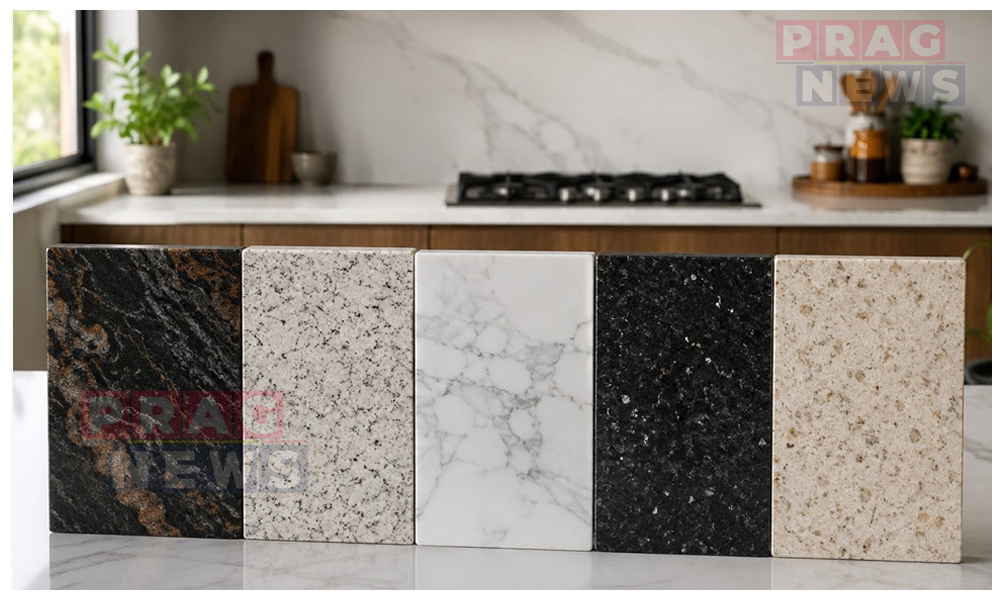
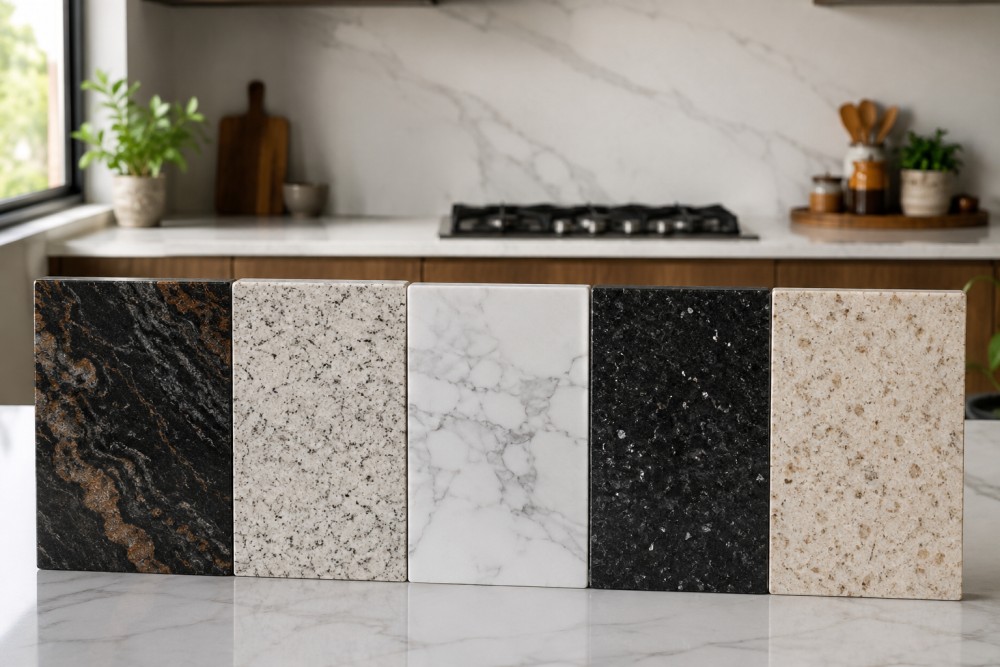
Kitchen slabs are available in a variety of natural and engineered materials, each offering different levels of durability, maintenance, and design flexibility. Understanding how these materials perform under everyday cooking conditions helps homeowners choose the most suitable stone for kitchen slab applications in Indian kitchens.
Granite
Granite is one of the most widely used materials for kitchen slabs because of its natural strength and heat resistance. It withstands everyday cooking well and is available in a variety of colours and patterns. However, being a natural stone, it requires periodic sealing to help prevent moisture absorption and staining.
Marble
Marble is appreciated for its timeless appearance and distinctive natural veining. It creates an elegant kitchen aesthetic but is comparatively softer and more porous than granite. Regular sealing and careful maintenance are often needed to protect the surface from stains, scratches, and acidic food spills.
Quartz
Quartz is an engineered material made by combining natural quartz with resins, resulting in a non-porous and consistent surface. It offers good resistance to stains and everyday wear while requiring less maintenance than many natural stones. Its wide range of colours and patterns also makes it suitable for different kitchen styles. However, as quartz contains polymer resins, it can scorch or discolour under high heat, requiring the use of trivets for hot cookware.
Kota Stone
Kota stone is known for its durability and cost-effectiveness. Its natural matte finish provides good slip resistance and suits both traditional and contemporary kitchens. However, it offers fewer design options than other countertop materials and may require sealing to improve stain resistance.
Sintered Stone
Sintered stone is manufactured under extremely high heat and pressure using natural minerals, creating a dense, non-porous surface engineered for demanding environments. It offers excellent resistance to scratches, stains, heat, and moisture while requiring minimal maintenance. For example, brands such as Neotra Advanced Surfaces offer stone-look surfaces like Scala Crema, a marble-inspired finish that delivers the elegance of natural stone with the durability required for busy kitchen slabs.
Each material offers distinct advantages, but their ability to withstand everyday cooking, heat, spills, and long-term wear varies considerably. A direct comparison provides a clearer understanding of which material performs best in busy kitchens.
Side-by-Side Comparison: Which Stone Performs Best?
Granite, marble, quartz, Kota stone, and sintered stone each offer distinct benefits for kitchen slabs. However, their long-term performance depends on how well they withstand the demands of everyday cooking, including heat, moisture, stains, and frequent cleaning.
Feature
Granite
Marble
Quartz
Kota Stone
Sintered Stone
Scratch resistance
Excellent
Moderate
Good
Good
Excellent
Stain resistance
Good
Moderate
Excellent
Low to Moderate (Acid sensitive)
Excellent
Heat resistance
Excellent
Good
Low-Moderate
Excellent
Excellent
Moisture resistance
Good
Moderate
Excellent
Moderate
Excellent
Maintenance
Moderate
High
Low
Moderate
Low
Long-term durability
Excellent
Good
Good
Good
Excellent
Kitchen Countertop Designs for Different Layouts
The design of a kitchen slab should complement the layout while supporting efficient movement and food preparation. Choosing the right counter tops for kitchen layouts helps maximise functionality without compromising aesthetics.
Straight Kitchen Countertops
Straight countertops provide a simple and efficient work surface for compact kitchens. Their linear layout supports easy movement while offering sufficient space for everyday cooking tasks.
L-Shaped Countertops
L-shaped countertops maximise corner spaces and create separate areas for cooking and preparation. They are suitable for medium-sized kitchens that require additional workspace without feeling crowded.
U-Shaped Countertops
U-shaped countertops surround the user on three sides, providing generous preparation space and storage. This layout works well in larger kitchens where multiple work zones improve efficiency.
Island Countertops
Kitchen islands provide an additional work surface for food preparation, dining, or entertaining. They also serve as a visual focal point in open-plan kitchens while enhancing overall functionality.
Selecting the right countertop layout is only one aspect of kitchen planning. The choice of colours and finishes also influences how well the surface complements the overall interior.
Colours and Finishes for Kitchen Slabs
The colour and finish of a kitchen slab influence both the appearance and functionality of the space. The right combination can complement cabinetry, flooring, and lighting while helping the surface retain its visual appeal despite everyday use.
● Marble-inspired finishes: Create a timeless, elegant look that suits both modern and classic kitchens.
● Stone-inspired finishes: Add natural texture and pair well with a variety of interior styles.
● Neutral colours: Shades such as white, grey, beige, and black provide versatility and blend seamlessly with different kitchen palettes.
● Matte finishes: Offer a contemporary appearance while minimising the visibility of fingerprints and smudges.
● Polished finishes: Reflect light to create a brighter, more spacious kitchen while highlighting the surface's natural beauty.
A well-chosen finish enhances the overall appearance of a kitchen slab, but selecting a material that performs reliably under daily use is equally important.
Conclusion
Selecting the right stone for a kitchen slab involves balancing aesthetics with long-term performance. While granite, marble, quartz, and Kota stone each offer distinct advantages, sintered stone provides a well-rounded combination of heat resistance, stain resistance, durability, and low maintenance. By comparing materials based on everyday kitchen requirements, homeowners can choose countertops that remain functional, visually appealing, and durable for years.
Continue Reading