
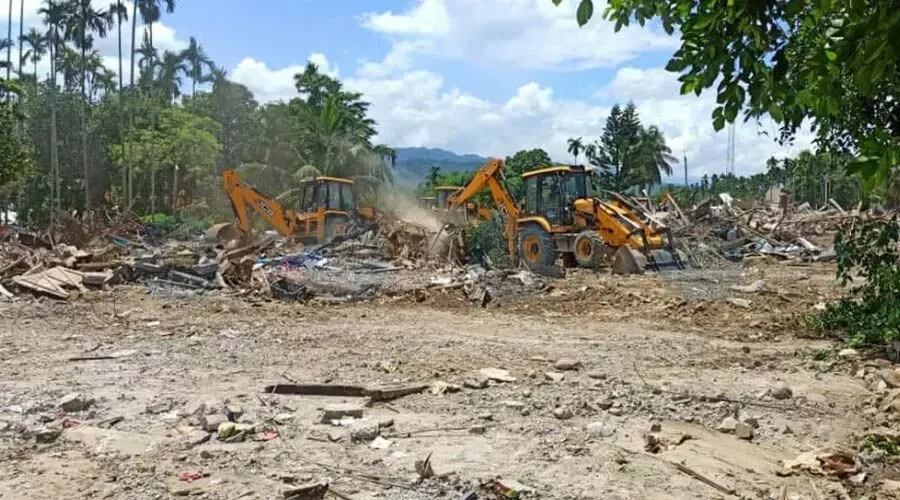
Across Assam, from the plains of Darrang to the riverine tracts of Dhubri and beyond, the rumble of bulldozers has become a recurring sound, signaling government-led eviction drives. These operations, which the state maintains are aimed at reclaiming public land from alleged illegal occupation and safeguarding indigenous interests, have displaced thousands of families and brought questions of land ownership, migration, identity, and the rights of vulnerable communities to the forefront of public debate.
While legitimate reasons often underpin such exercises, the escalating scale and frequency of these operations demand a critical examination of whether Assam possesses a comprehensive policy to address the needs of those displaced. Government data, recently highlighted in national reports, indicates that 10,620 families were evicted from state land between 2016 and August 2024. A significant portion of this displacement, affecting 5,854 families, occurred after May 2022. Tragically, these operations have also claimed lives, with four individuals reportedly dying during eviction drives within the same period.
These figures offer a stark indication of the human impact, though they do not represent a complete tally of all subsequent operations. The focus remains on the state's stated objectives, yet the humanitarian aspect of these large-scale displacements cannot be overlooked. Without a clear and inclusive rehabilitation framework, thousands are left vulnerable, facing uncertainty about their livelihoods and shelter.
As the state continues its efforts to manage public land, there is an increasing imperative to develop a robust and transparent rehabilitation policy. Such a framework would ensure that while state objectives are pursued, the dignity and fundamental rights of displaced citizens are upheld, providing them with necessary recourse and support in the wake of these extensive drives.
Continue Reading