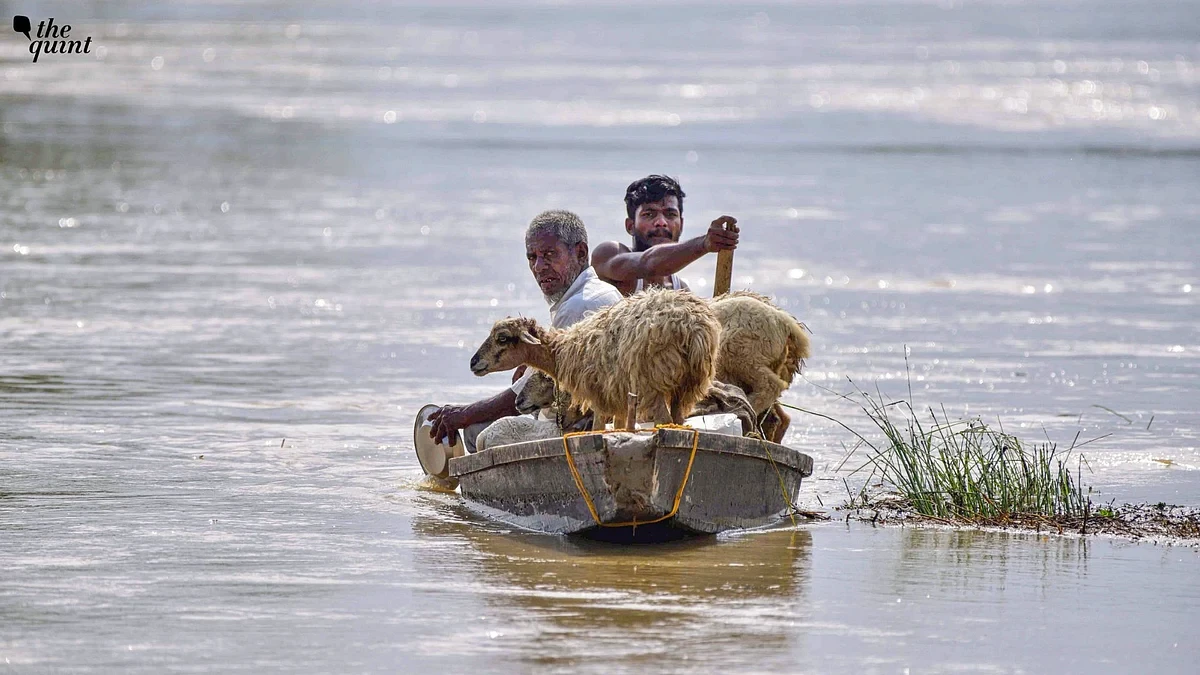
Assam has recently endured one of its most devastating flood crises in recent memory, with reports indicating a tragic loss of around 80 lives and over 3 lakh individuals severely impacted. Thousands of villages across the state have been inundated, forcing countless families to seek refuge in makeshift camps along roads and embankments, their homes submerged under rising waters.
While the immediate focus remains on rescue and relief, a growing chorus of observers suggests that the magnitude of this disaster is not merely an unavoidable act of nature. Instead, it underscores significant structural failures and political choices that have exacerbated the annual flood cycles, turning them into deadly humanitarian crises year after year.
In response to the widespread suffering, the ruling Bharatiya Janata Party (BJP) has emphasized highly visible relief operations. This includes a notable consignment valued at Rs 16 crore, comprising 1.8 lakh mekhela chadors, 1.8 lakh children’s T-shirts, and 1.5 lakh mosquito nets, which was flagged off from the party’s state headquarters in Guwahati. Concurrently, the Chief Minister has affirmed the state's full capability to manage the crisis independently, without requiring external assistance.
However, critics argue that such efforts, while providing immediate succour, often overshadow the deeper need for robust preparedness, transparency in resource allocation, and sustained public investment in flood mitigation infrastructure. There is a perception that disaster management is increasingly veering towards image-management, diverting attention from the harder work required to prevent future catastrophes and protect vulnerable communities.
As the floodwaters eventually recede, the emphasis must shift from short-term relief drives to a comprehensive re-evaluation of policies and investments aimed at building long-term resilience. The human cost of these floods demands accountability and a commitment to addressing the root causes that transform natural phenomena into widespread human tragedies.
Continue Reading