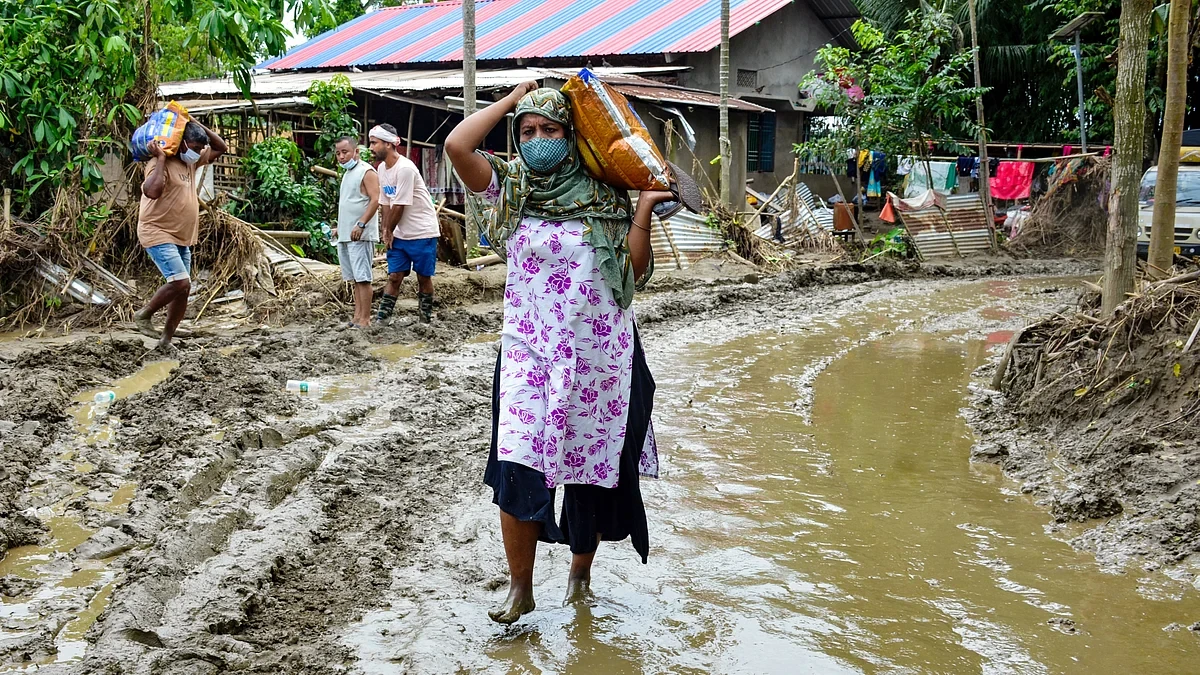

Even as floodwaters show signs of receding in several parts of Assam, the aftermath of the deluge continues to keep over 10,000 residents displaced, forcing them to remain in relief camps. The primary challenge cited is the presence of stagnant water inside homes, rendering them uninhabitable, particularly affecting vulnerable groups including pregnant and lactating mothers, children, and persons with disabilities.
The state's relief efforts are ongoing, with 55 relief camps and 18 relief distribution centres actively operational across the affected districts. The humanitarian crisis is compounded by a rising death toll, which has now reached 98 for this flood season, following the recovery of another body in the Charaideo district today.
While areas like the Noa River in Darrang district have seen water levels decrease, several villages within the same district, including Outola, Mothonga, and Bengabora, are still grappling with persistent floodwaters. Residents describe a dire situation, with one woman from Darrang recounting her visit home to find stagnant water, making it impossible to return. She highlighted the loss of livelihood, with fish escaping from their pond, and appealed to the government for assistance in repairing damaged houses. A similar predicament is reported from Betbari Bhahdhoragaon in Sivasagar district, underscoring the widespread nature of the crisis.
The protracted displacement underscores the significant challenges faced by communities as they await conditions suitable for safe return and begin the long process of recovery and rehabilitation.
Continue Reading