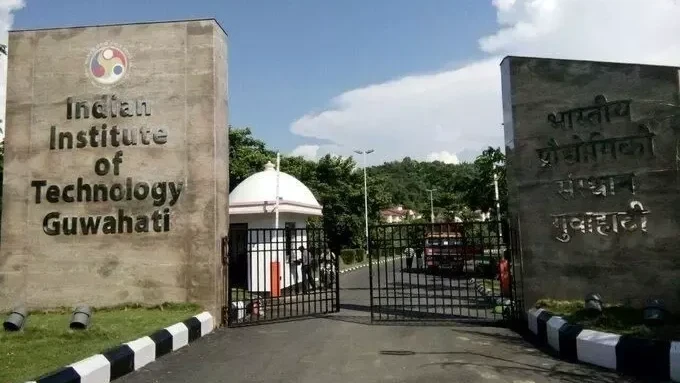
GUWAHATI: Scientists at the Indian Institute of Technology (IIT) Guwahati have developed a groundbreaking, environmentally benign biological material aimed at mitigating the presence of toxic lead in polluted water. This significant advancement, led by Professor Debasish Das from the Department of Biosciences and Bioengineering, leverages specific strains of cyanobacteria, commonly known as blue-green algae, found abundantly in local freshwater bodies.
The research team pinpointed that exopolysaccharides (EPS), a sticky, sugar-rich substance naturally produced by these blue-green algae, demonstrated a remarkable capacity for lead absorption. In controlled laboratory experiments, this algal derivative successfully removed an impressive 66.2 percent of lead, one of the most dangerous heavy metals, from contaminated water samples. The organisms utilized in this study are ubiquitous in the region, thriving in village ponds, lakes, reservoirs, paddy fields, and slow-moving freshwater systems.
This innovative solution arrives amidst escalating concerns regarding lead contamination across India. A 2020 report by UNICEF and Pure Earth highlighted a dire situation, revealing that over 275 million children nationwide recorded blood lead levels at or surpassing dangerous thresholds. Furthermore, reports from the Central Ground Water Board (CGWB) indicate that 20 to 30 percent of groundwater samples tested in key regions exhibit lead contamination, underscoring the critical need for effective remediation strategies.
The development from IIT Guwahati presents a sustainable and accessible approach to tackling this pervasive public health and environmental challenge. By utilizing readily available biological resources, the research offers a cost-effective and eco-friendly pathway towards cleaner water, holding particular relevance for communities in Assam and the broader Northeast where such natural water bodies are prevalent.
Continue Reading