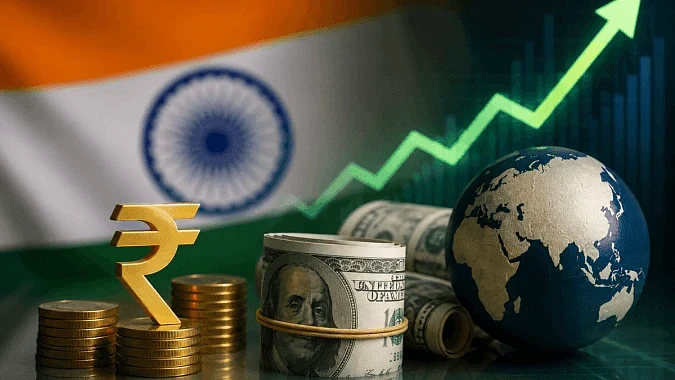
India's foreign exchange reserves have continued their upward trajectory, registering a further increase of $1.08 billion to reach a substantial total of $676.24 billion. This latest expansion, as reported by the Reserve Bank of India (RBI), underscores a sustained strengthening of the nation's external financial position and its capacity to absorb global economic shocks.
The consistent growth in forex reserves is a critical indicator of economic stability, providing a robust buffer against global uncertainties, including potential currency volatility and external debt obligations. Such robust reserves are instrumental in managing the exchange rate, facilitating smooth international trade, and bolstering overall investor confidence in the Indian economy, especially relevant for regions like Assam and the Northeast that are increasingly integrated into national and global supply chains.
India's foreign exchange reserves typically comprise several key components: foreign currency assets (FCAs), which form the largest chunk; gold reserves; Special Drawing Rights (SDRs) held with the International Monetary Fund (IMF); and the country's reserve position with the IMF. While the precise breakdown of the contributing factors for this specific week's increase was not detailed in the RBI's announcement, the overall rise suggests positive inflows or favourable valuation adjustments across these diverse asset classes.
This ongoing accumulation of reserves is generally viewed by economic experts as a testament to India's growing economic resilience. It provides the central bank with enhanced flexibility in navigating monetary policy decisions and intervening in currency markets when necessary. The extended gains in these crucial financial buffers reflect a positive outlook for India's economic fundamentals, offering a sense of security in an otherwise unpredictable global financial environment.
Continue Reading