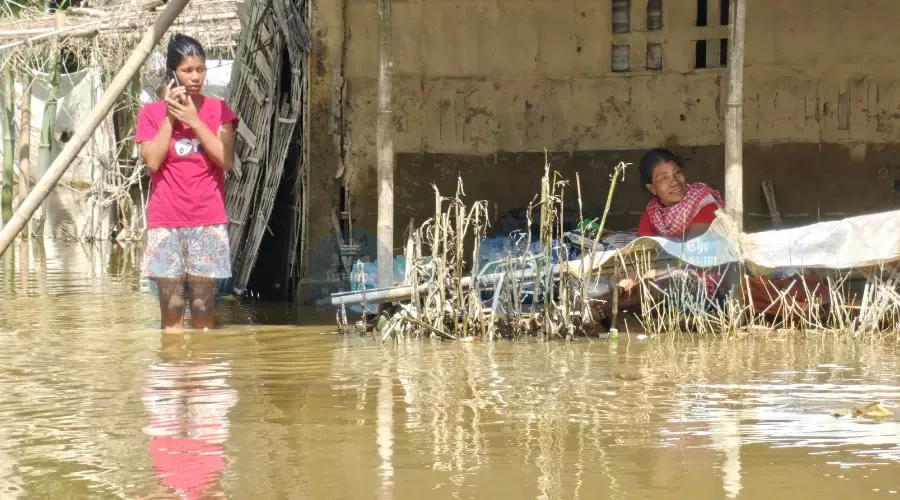
Guwahati, August 3: While the immediate threat of inundation lessens in districts like Sivasagar, Charaideo, Jorhat, and Golaghat, the aftermath of the devastating floods has given rise to a critical public health emergency across Upper Assam. The receding waters have exposed vast deposits of thick silt, mud, and debris, creating fertile ground for a host of ailments and compounding the misery of flood-affected communities.
Residents who endured days of living in submerged conditions are now reporting a surge in health complications. Skin infections, persistent fevers, respiratory problems, and diarrhoea are becoming increasingly common. Beyond the physical toll, the prolonged ordeal has also led to significant psychological distress among survivors.
A resident from a flood-impacted area, Ranjita Buragohain, described the grim reality: “I have developed small eruptions on my face and legs, and the itching has become almost unbearable. A persistent foul smell hangs heavy in the air everywhere.” Another woman shared her struggle with a lingering fever since the floods began, noting it had not subsided despite medication. The emotional impact is also profound, with an expectant mother, Basanti Phukan, highlighting the deep psychological toll the floods have taken on families.
As families in these regions continue to rely heavily on relief aid for survival, they face the constant threat of widespread disease outbreaks. The challenge for local authorities now shifts from immediate rescue to comprehensive public health intervention, ensuring access to medical care and sanitation to prevent the current situation from escalating into a larger humanitarian crisis.
Continue Reading