
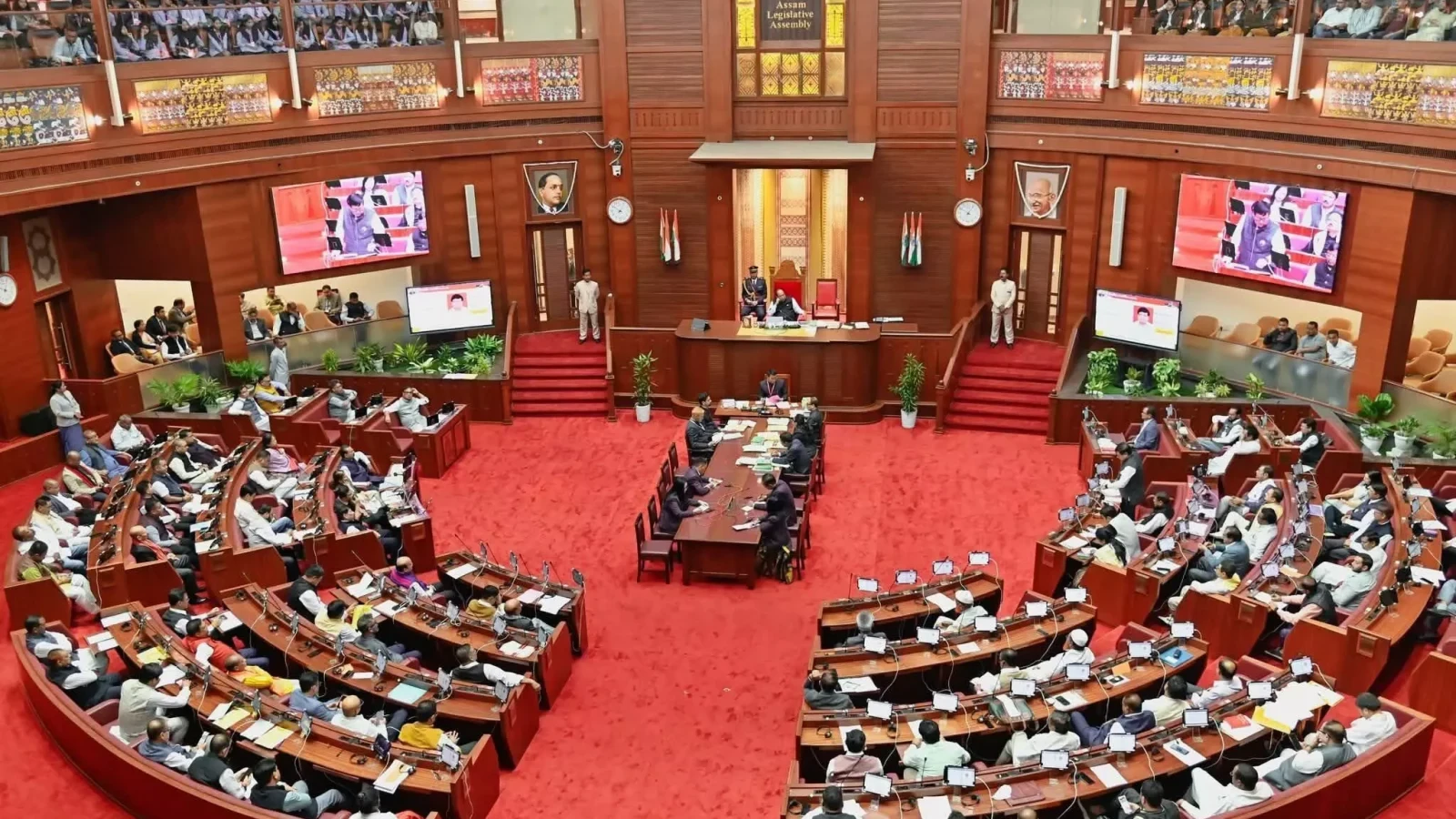
Guwahati: The Assam Legislative Assembly, on Wednesday, brought its Budget Session to a close by approving five significant bills. Among them, the Assam Land and Revenue Regulation (Amendment) Bill, 2026, emerged as a focal point of intense discussion due to its provisions concerning the definition of an "original inhabitant" and its potential implications for land rights, particularly around the state's revered heritage institutions.
The most fervent debate revolved around the land amendment bill, which was tabled by Parliamentary Affairs Minister Pijush Hazarika on behalf of Revenue and Disaster Management Minister Keshab Mahanta. Opposition members raised serious questions regarding the proposed criteria for identifying "original inhabitants." The bill stipulates that families residing in Assam before 1971, alongside requiring proof of three generations prior to 2006, would qualify. Critics argued that these provisions introduce ambiguity and could potentially lead to constitutional challenges, impacting a broad spectrum of the population.
Addressing the concerns during the debate, the Chief Minister provided clarifications, although opposition members continued to highlight the complexities inherent in the proposed definitions. The discussion underscored the sensitive nature of land rights and identity in Assam.
In addition to the land amendment legislation, the House also gave its assent to four other key bills. These include the Registration (Assam Amendment) Bill, 2026, the Indian Stamp (Assam Amendment) Bill, 2026, the Assam Fixation of Ceiling on Land Holdings (Amendment) Bill, 2026, and the Assam State Higher Education Council Bill, 2026.
The successful passage of these bills marks the legislative achievements of the session, with the new land law now set to proceed, though its interpretation and implementation may continue to be subjects of public discourse.
Continue Reading