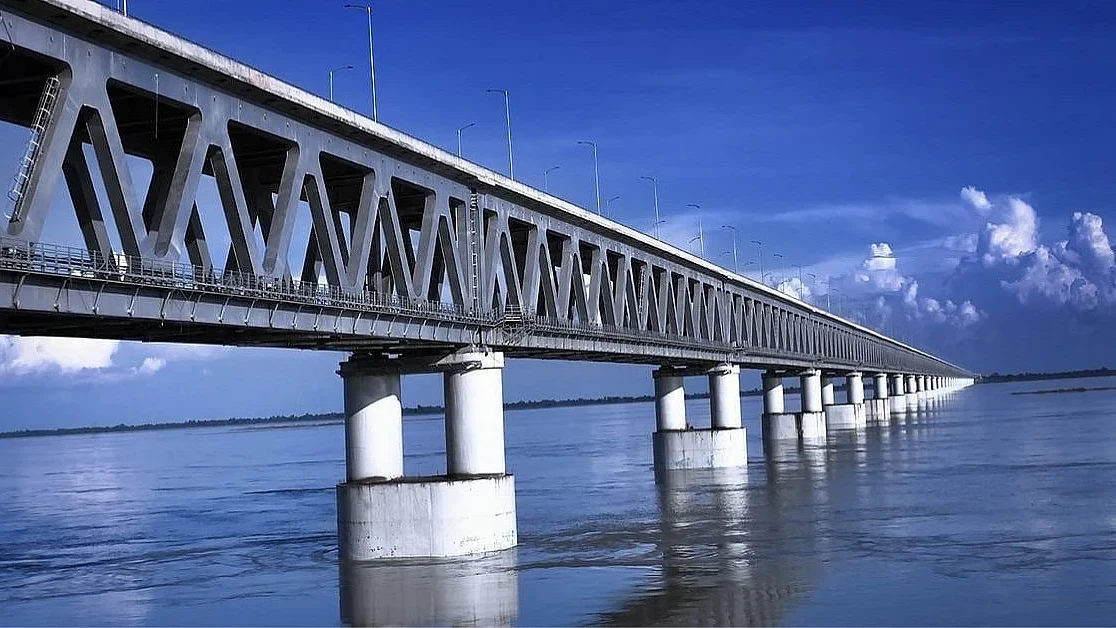
The Brahmaputra River has long maintained a vital position in the economic framework of Assam and the broader Northeast. Beyond its sheer volume of water, the waterway dictates the region's agricultural productivity, sustains fisheries, links distant settlements, drives commerce, and secures the daily livelihoods of populations residing along its banks. Together with its numerous tributaries, the river creates a vast interconnecting network that bridges rural communities with urban markets and commercial hubs.
A newly released Assam government water-sector document underscores this reality, describing the Brahmaputra as the foundation of the state's water economy. According to the document, the river basin encompasses a major share of the state's total geographical expanse, making it clear that the future economic trajectory of Assam is intrinsically linked to how its river systems are managed and productively utilized.
Agriculture stands out as a primary sector deeply influenced by the river. Over generations, the fertile alluvial plains deposited by the Brahmaputra and its feeder streams have enabled the continuous cultivation of rice, vegetables, pulses, oilseeds, and various other staple crops. While seasonal inundations present ongoing challenges, they also deposit nutrient-rich silt that sustains the agrarian landscape of the valley.
Continue Reading