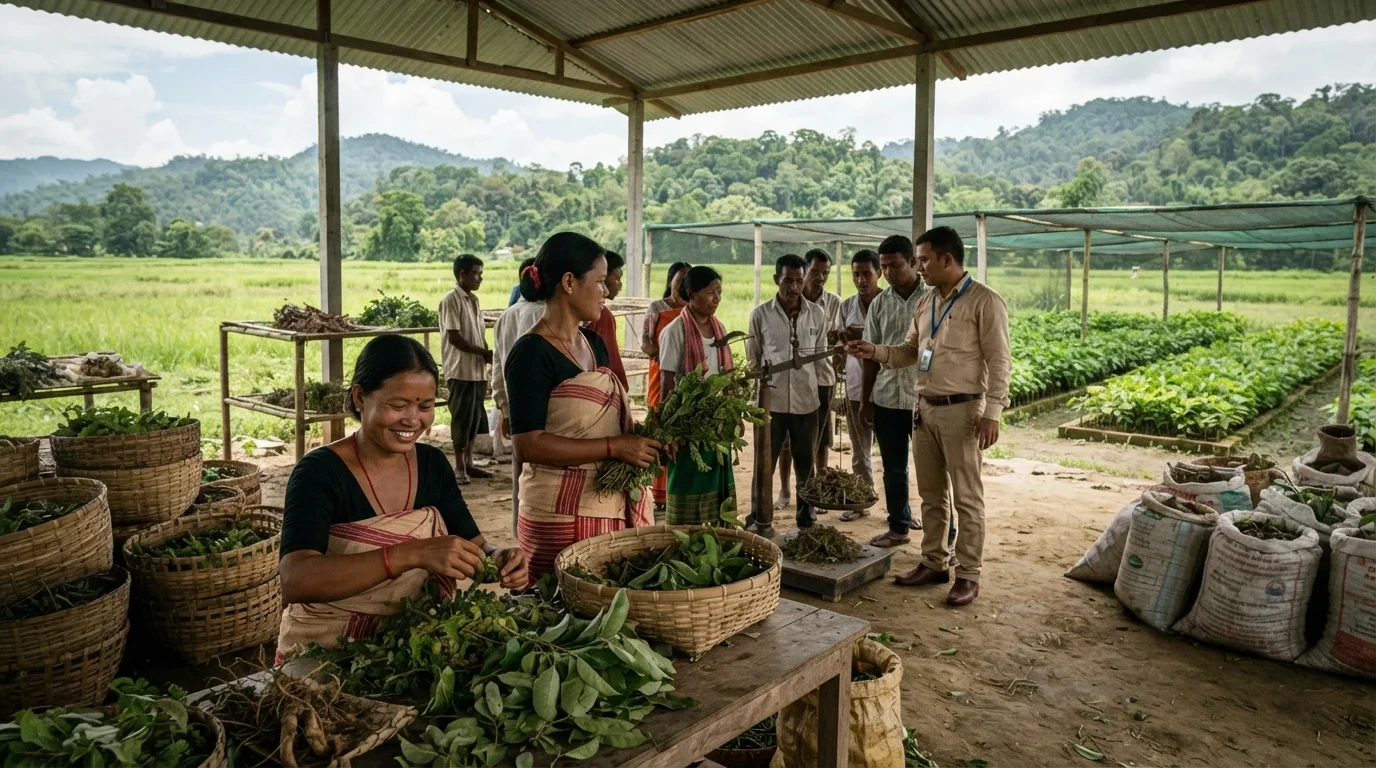
Kokrajhar has emerged as a focal point for environmental and community development in Assam after being chosen among 16 selected tribal hotspots spanning 13 states and union territories. The region is now part of a nationwide project designed to safeguard rich medicinal plant biodiversity while uplifting indigenous communities.
The Ministry of Tribal Affairs, Government of India, has launched the initiative titled "Integrated Conservation, Agro-Technology and Bioresource Enterprise Development for Sustainable Tribal Livelihoods in Tribal Hotspots of India" in collaboration with the CSIR-National Botanical Research Institute based in Lucknow. The core objective is to merge the preservation of native medicinal flora with traditional knowledge systems, creating sustainable economic opportunities and enterprise pathways for tribal populations.
Central to the success of this endeavor is the enhancement of the People's Biodiversity Register in tribal areas. This requires detailed and thorough documentation of local biodiversity alongside traditional ecological knowledge.
Key components outlined for the project include the comprehensive documentation of 200 to 300 medicinal plant species and the scientific propagation of 30 to 40 rare, endangered, and threatened species. Furthermore, the plan entails setting up 16 community nurseries and 16 seed banks, alongside targeted efforts to build community-level capacities.
Continue Reading