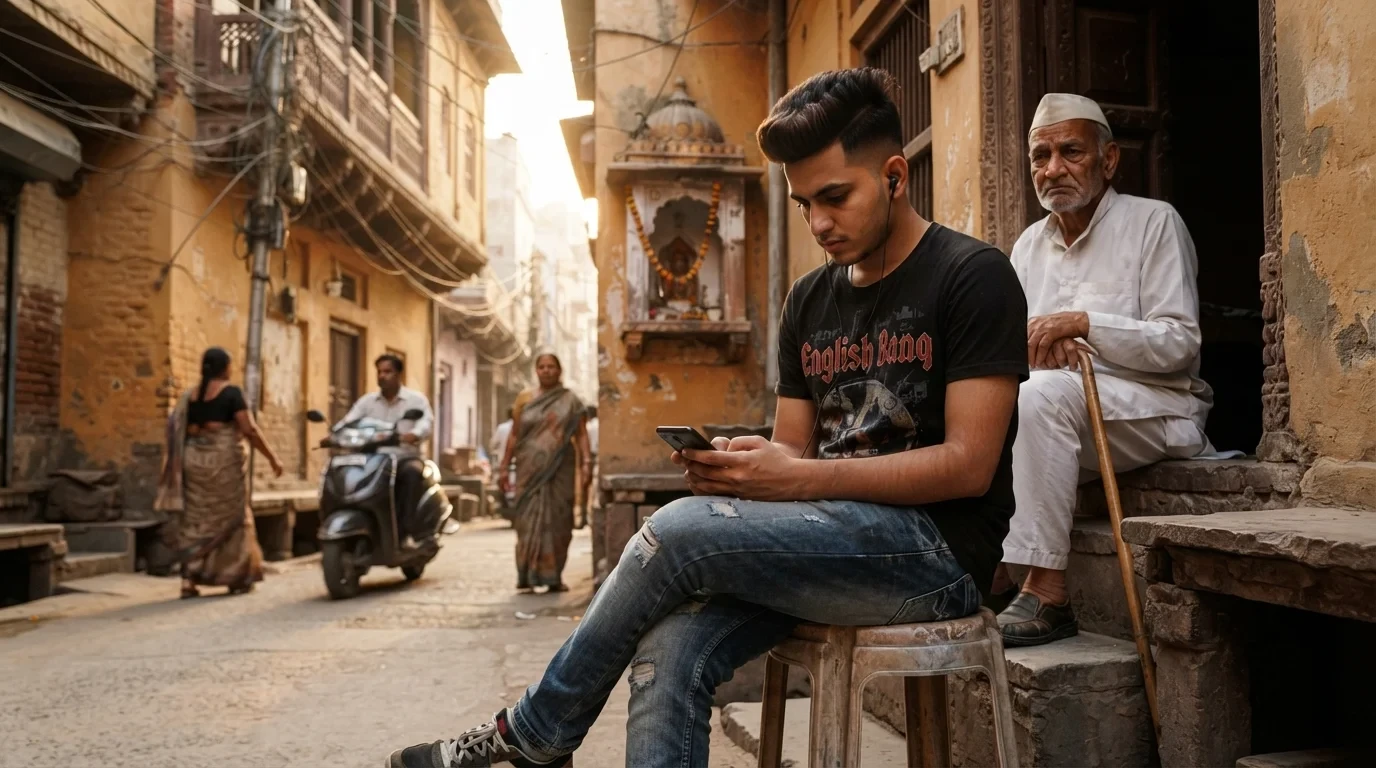
In contemporary society, a notable inclination has emerged among the younger demographic toward readily embracing Western customs, often overlooking whether such influences are beneficial or detrimental. Observers note that this shift has created a distance between the present generation and the profound depths of traditional Indian civilization.
Historically, the nation boasted a celebrated heritage that resonated globally, anchored by the Sanskrit language—regarded as the foundation of numerous languages. Ancient texts including the Vedas and the Upanishads originated from this linguistic tradition, positioning the country as a historic beacon of spiritual and scholarly wisdom. Renowned ancient institutions such as Nalanda and Takshashila served as major centers of education, attracting thousands of scholars from international locations seeking knowledge.
Conversely, current trends show a preference for external cultural practices, a shift that commentators argue poses challenges to native civilization. Preserving local roots and upholding indigenous heritage are viewed as essential steps in countering detrimental influences and safeguarding historical identity.
Characterized by a rich tapestry of diverse faiths, traditions, and ethnic communities, the nation's core strength remains rooted in its unity amid diversity. Responsible citizenship entails maintaining a steadfast connection to foundational cultural values rather than forsaking ancestral traditions.
Continue Reading