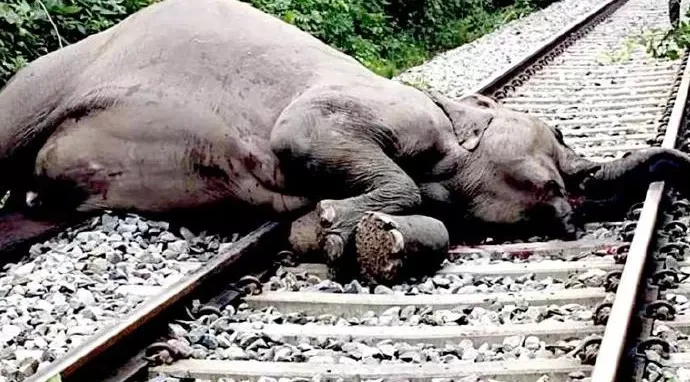
Guwahati: Assam has unfortunately emerged as a leading hotspot for elephant fatalities across India, reporting the highest number of deaths caused by train accidents and poisoning between 2009 and 2024. During this 16-year span, the state accounted for 82 elephant deaths from collisions with trains, the highest figure nationwide.
These concerning findings are part of a comprehensive study titled ‘Reframing Human-Elephant Conflict in India through context dependent coexistence strategies,’ conducted by prominent environmental and research institutions. Beyond train-related incidents, Assam also recorded the highest number of elephant deaths due to poisoning during the same period. Overall, the state ranked second nationally in elephant deaths stemming from all anthropogenic causes, only behind Odisha.
The study underscores the alarming escalation of Human-Elephant Conflict (HEC) into one of India's most significant conservation and socio-economic challenges, imposing substantial costs on both human lives and elephant populations. Over the past 16 years, the nation witnessed a staggering 7,868 human fatalities from elephant encounters, translating to an average of nearly 500 deaths annually.
Officials involved in the study noted that four states—Odisha, Jharkhand, West Bengal, and Assam—collectively accounted for almost 70 percent of these tragic human incidents. This data firmly establishes these regions as critical conflict hotspots, demanding urgent and effective strategies to foster coexistence and mitigate further losses for both humans and the endangered pachyderms.
Continue Reading