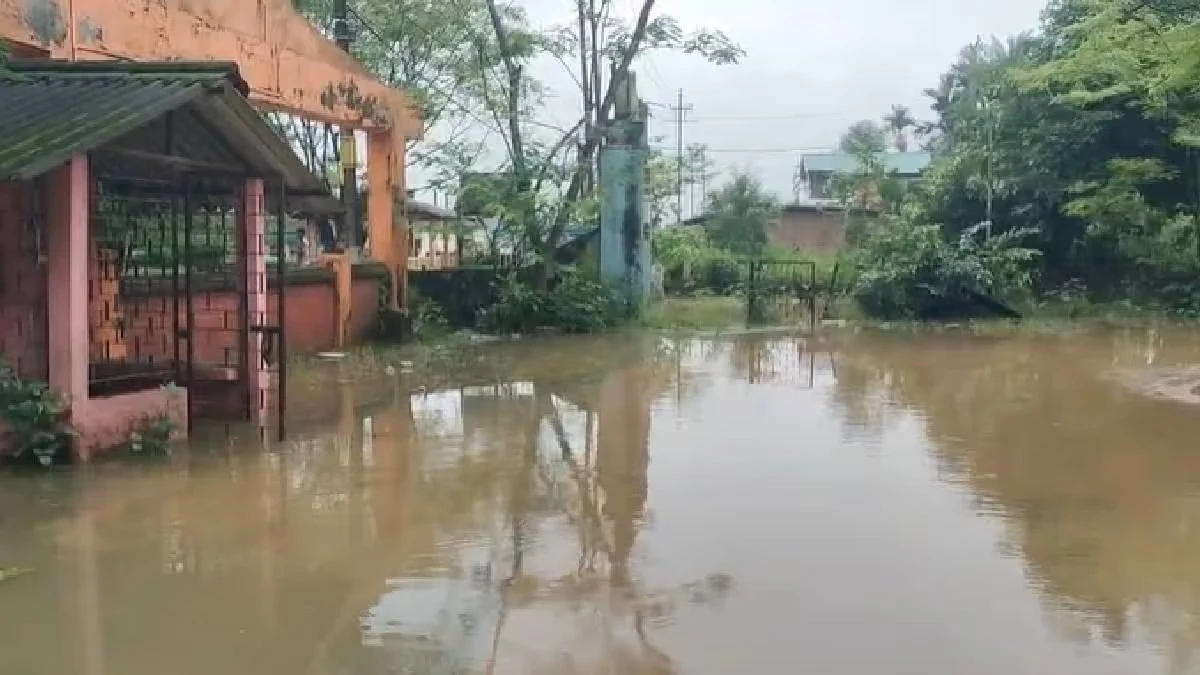
Educational institutions across Ledo, a town in Assam's Tinsukia district, have been severely impacted by artificial floodwaters following a spell of intense rainfall. The deluge has left school and college campuses waterlogged, posing considerable challenges for students and faculty alike.
The inundation, characterized as 'artificial floods,' typically indicates issues with local drainage systems rather than natural river overflows. Heavy precipitation, common during this season in the Northeast, often overwhelms existing infrastructure, leading to water accumulation in low-lying areas, including educational compounds.
Reports from the ground suggest that classrooms have become inaccessible, and campus grounds are submerged, making daily attendance and operations difficult. This disruption not only affects the academic calendar but also raises concerns about the safety and well-being of the student community.
Local residents have frequently highlighted the need for improved urban planning and robust drainage solutions to mitigate such recurring issues. The current situation in Ledo underscores the persistent challenge faced by many towns in Assam, where inadequate storm-water management systems struggle to cope with the region's heavy monsoon showers.
As authorities assess the situation, the immediate focus is on ensuring the safety of individuals and restoring normalcy to the affected institutions. Long-term strategies for enhancing drainage infrastructure are crucial to prevent similar disruptions in the future, safeguarding the educational environment for students in Ledo.
Continue Reading