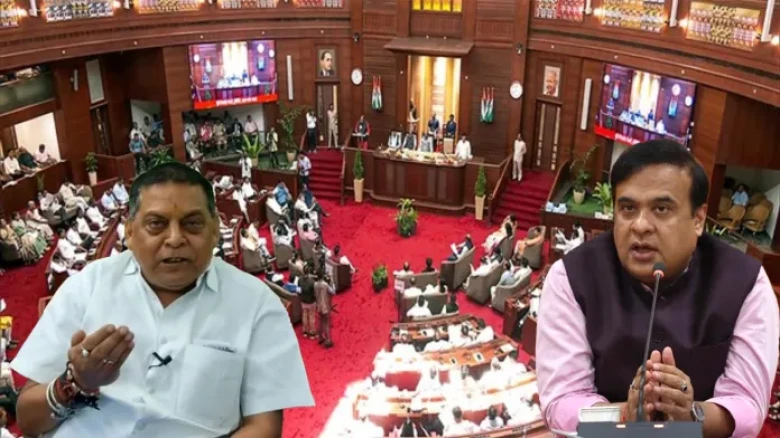
The Assam assembly has abolished the practice of a two-hour adjournment for Jumma prayers on Fridays, a policy introduced by Saadulah’s Muslim League government during the colonial period.
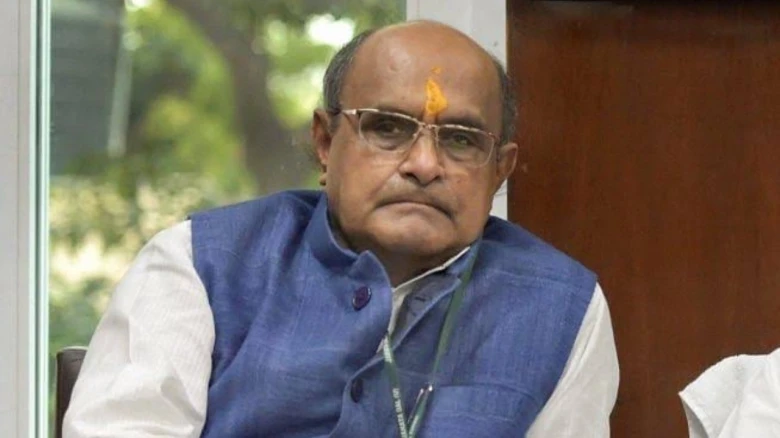
Digital Desk: Janata Dal-United (JDU) leader Neeraj Kumar on Saturday condemned the Assam government’s decision to end the two-hour adjournment for Jumma prayers in the state assembly, asserting that no one has the right to infringe upon religious practices. He suggested that Assam Chief Minister Himanta Biswa Sarma should focus more on addressing poverty rather than altering religious observances.
“The decision made by the Assam Chief Minister is against the core principles of the country’s Constitution. Every religious belief has the right to preserve its traditions. I want to ask CM Sarma: You are imposing a ban on Friday holidays during Ramadan and claim that this will increase work efficiency. A significant part of Hindu tradition is the Maa Kamakhya Temple–can you impose a ban on the practice of sacrifice there?” he said.
“No one has the right to attack religious beliefs. It would have been better if you focused your attention on lifting people above the poverty line and ensuring that Assam doesn’t have to face floods,” the JDU leader added.
The Assam assembly has abolished the practice of a two-hour adjournment for Jumma prayers on Fridays, a policy introduced by Saadulah’s Muslim League government during the colonial period.
In response to the decision, CM Himanta Biswa Sarma stated that the move was supported by both Hindu and Muslim MLAs, who collectively agreed that the two-hour break was no longer appropriate. “The Hindus and Muslims of our assembly came together in the MLA’s Rule Committee and unanimously agreed that the break was outdated. We decided to continue our work during this period. This practice, which started in 1937, was discontinued as of yesterday,” he said.
Under the new rule, the assembly sessions will begin at 9:30 am daily, including Fridays, without any adjournment for religious reasons. The change was made to eliminate a colonial-era practice that aimed to create religious divisions within society.
Continue Reading