
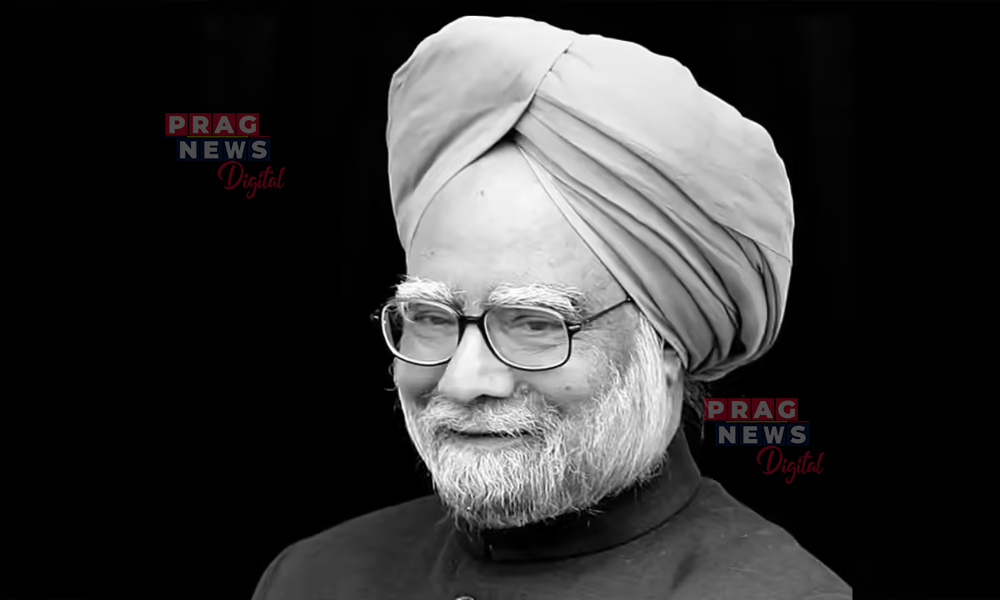
Manmohan Singh represented Assam in the Rajya Sabha for five terms starting from 1991
Digital Desk: Today, several leaders paid homage to former Prime Minister Dr. Manmohan Singh on his first death anniversary, recalling his humility, honesty, and enduring legacy that continues to inspire generations. Singh, who passed away last year at the age of 92, was a towering figure in Indian politics and economics.
Manmohan Singh represented Assam in the Rajya Sabha for five terms starting from 1991, including during his decade-long tenure as Prime Minister from 2004 to 2014. He also served as Finance Minister in the P.V. Narasimha Rao government between 1991 and 1996, implementing far-reaching economic reforms that reshaped India’s economy, and as Governor of the Reserve Bank of India from 1982 to 1985.
Congress President Mallikarjun Kharge described Singh as a transformative leader who expanded opportunities for millions through economic reforms, lifted large sections of society out of poverty, and steered India onto a path of sustainable growth.
Born on 26th September , 1932, Singh was an eminent economist whose name is synonymous with the transformative changes of his era. His government introduced landmark initiatives, including the National Rural Employment Guarantee Act (NREGA) 2005, later renamed MGNREGA, and the Right to Information Act (RTI) 2005, both of which strengthened governance, increased transparency, and improved public accountability.
Singh’s tenure as Finance Minister is widely recognized for pioneering reforms that liberalized the Indian economy, attracting global attention and setting the stage for India’s long-term economic growth. Even after his passing, Singh’s vision, integrity, and dedication to public service remain a guiding force for policymakers and citizens alike.
As India remembers its 13th Prime Minister, leaders across the political spectrum highlighted his unparalleled contributions to economic reforms, governance, and social welfare, ensuring that Dr. Singh’s legacy continues to inspire future generations.
Continue Reading