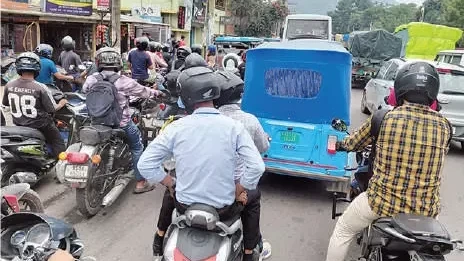
Guwahati is grappling with severe traffic congestion across key arteries, including Bharalumukh and Pandu, as the ongoing Ambubachi Mela draws lakhs of pilgrims to the city. The gridlock, which has persisted over the past two days, has left both local commuters and visiting devotees deeply frustrated, prompting critical questions regarding the efficacy of announced traffic management strategies.
With the annual spiritual congregation at Kamakhya Temple attracting a massive influx of devotees from various parts, several routes leading to the revered Nilachal hills have become bottlenecks. Residents report prolonged delays, transforming routine commutes into arduous journeys amidst the spiritual fervour.
Prior to the commencement of the mela, the Kamrup Metro district administration, in collaboration with the Guwahati Police's traffic department, had publicly outlined a comprehensive plan aimed at regulating vehicular movement. Officials had assured that measures were in place to mitigate inconvenience for both pilgrims and daily commuters throughout the event.
According to Deputy Commissioner of Police (Traffic), Jayanta Sarathi Borah, specific regulations were implemented, including a ban on private vehicles on the road connecting Nursery Point to the temple, with exceptions only for emergency and essential services. Additionally, vehicles transporting devotees from the Jalukbari side were directed to utilise the Nilachal Flyover service lane, dropping pilgrims near Gate No. 3 of the NF Railway Headquarters before proceeding to designated parking zones.
However, the ground reality of extensive snarls and delays indicates that these proactive steps have yet to fully alleviate the traffic challenges. As the Ambubachi Mela continues, the pressure remains on city authorities to reassess and adapt their strategies to ensure smoother movement for all navigating Guwahati's roads.
Continue Reading