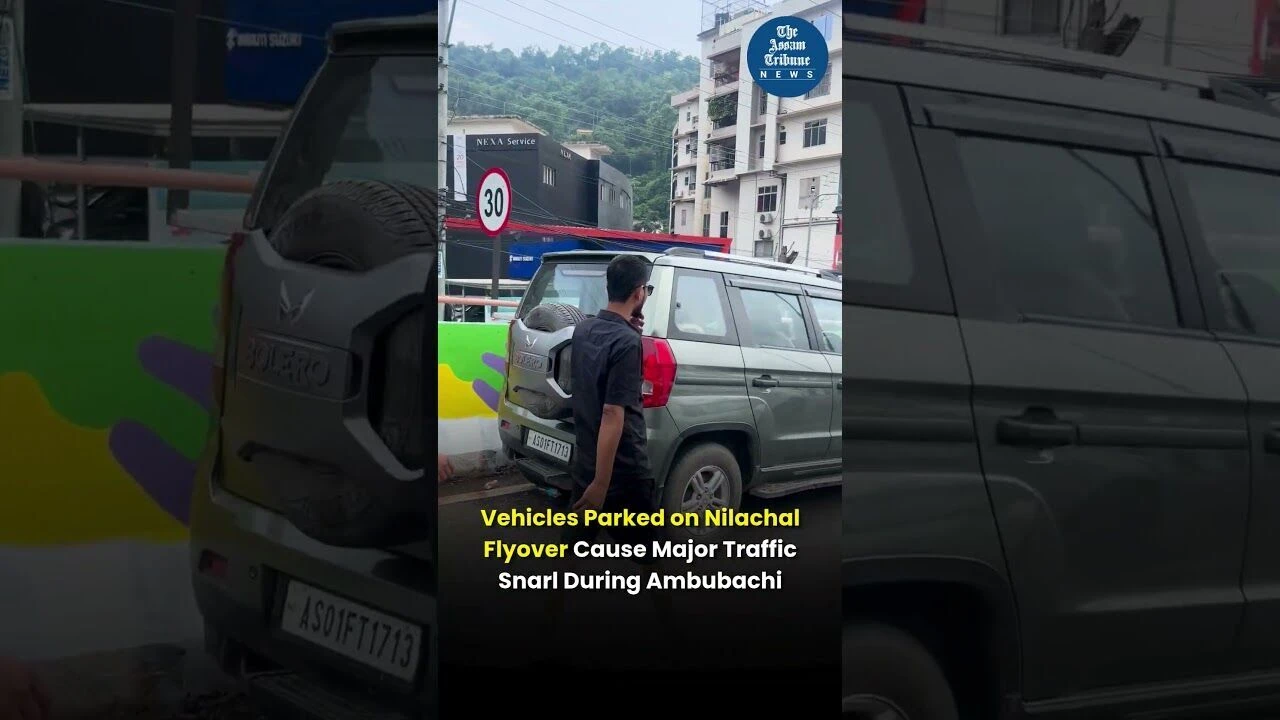
Guwahati experienced substantial traffic congestion on the vital Nilachal Flyover during the recent Ambubachi Mela, largely attributable to numerous vehicles parked indiscriminately on the elevated road. This unauthorised parking led to severe bottlenecks, significantly exacerbating travel difficulties for both local commuters and the multitude of pilgrims attending the annual religious congregation.
The Ambubachi Mela, an annual spiritual gathering held at the revered Kamakhya Temple atop Nilachal Hill, draws lakhs of devotees from across India and beyond to Guwahati, Assam. This massive influx of visitors naturally places immense strain on the city's infrastructure, particularly its road network. The Nilachal Flyover, designed to facilitate smooth traffic flow and provide swift access towards the temple area and other parts of the city, became a major point of obstruction as its lanes were occupied by stationary vehicles, reducing effective carriageway.
The resulting gridlock caused considerable inconvenience, with travel times significantly prolonged for anyone navigating through the area. Essential services and public transport also faced challenges in traversing the choked flyover, impacting timely movement. While city authorities typically implement special traffic arrangements during the Ambubachi Mela to manage the increased vehicular movement, the disregard for parking regulations by some motorists compounded the existing operational challenges.
The incident underscores persistent issues with traffic discipline and enforcement during large-scale public events in the region. Effective management of such significant gatherings requires not only robust planning and execution by authorities but also strict adherence to rules by the public to ensure smooth movement, safety, and minimal disruption for all.
Continue Reading