Goru Bihu reflects the deep-rooted bond between Assamese farmers and their livestock
Digital Desk: Goru Bihu, the first day of the week-long Rongali Bihu celebrations in Assam, is being observed with traditional fervour and devotion, marking the beginning of the Assamese New Year. Celebrated on the last day of the Assamese month ‘sot’ (mid-April), the day is dedicated to bathing, worshipping, and feeding cattle, symbolising deep agrarian gratitude.
Also known as Bohag Bihu, Rongali Bihu ushers in the Assamese New Year and the onset of the agricultural cycle. The first day, Goru Bihu, holds special significance, particularly among farming communities, where cattle play an essential role in livelihood and sustenance.
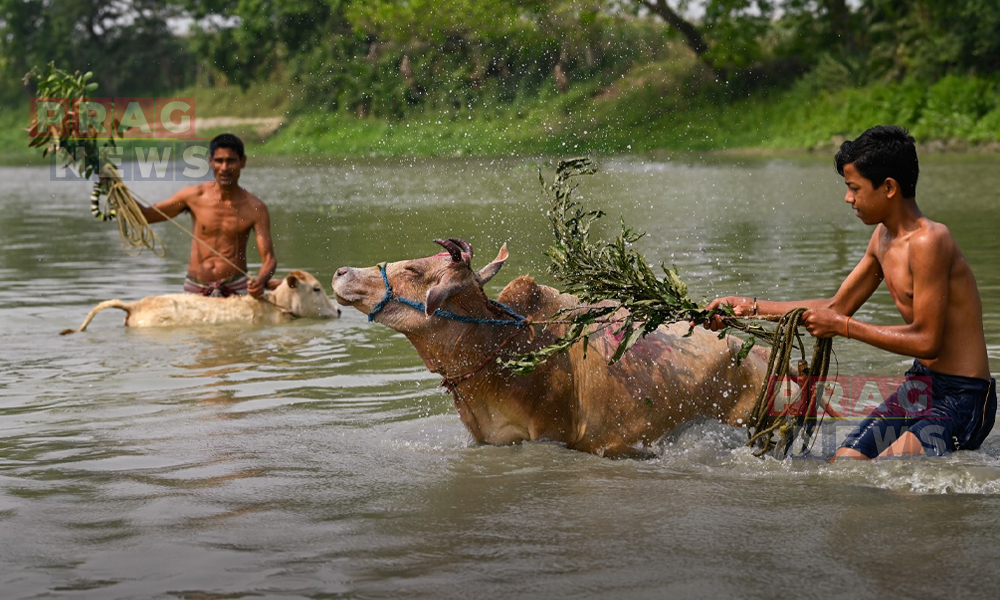
On this occasion, cattle are taken to nearby rivers, ponds, or water bodies for a ceremonial bath. The ritual is often accompanied by traditional songs, reflecting respect and appreciation for the animals’ contribution to farming activities.
As part of customary practices, cows are gently struck with twigs of medicinal plants such as dighalati (Litsea salicifolia) and makhioti (Flemingia strobilifera). This ritual is believed to protect them from insects and diseases.
Farmers also offer special feed to cattle, including local vegetables like bottle gourd (lau) and brinjal (bengena) while praying for their health and well-being. Old ropes (pogha) are replaced with new ones, and in some households, cattle are also fed traditional delicacies such as pitha.
Goru Bihu reflects the deep-rooted bond between Assamese farmers and their livestock, highlighting a harmonious relationship with nature. More than just a rural custom, it stands as a spiritual expression of gratitude and remains a cornerstone of Assam’s rich cultural heritage.
Continue Reading