
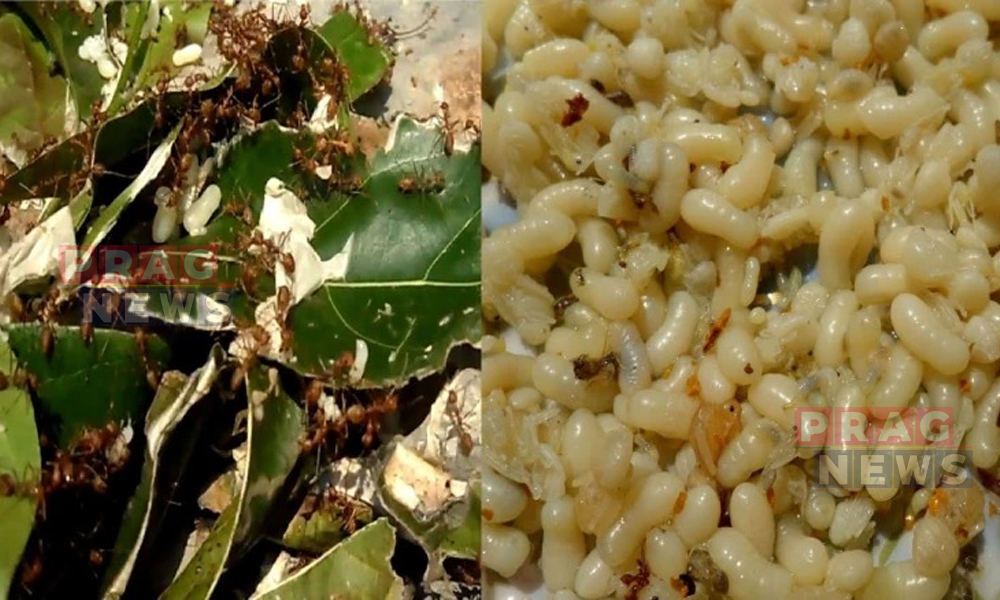
Consuming weaver ant eggs on Goru Bihu helps people to remain healthy throughout the year
Digital Desk: Today marks Goru Bihu, a cherished festival of Assam, observed on the last day of the Assamese month of ‘sot’ and the eve of Bohag. The festival is deeply rooted in tradition, with several customs that continue to enrich Assamese society.
One such unique tradition followed by a section of people is the consumption of weaver ant eggs, locally known as “amroli poruar tup.” This delicacy is especially popular among indigenous communities and is often sold at high prices in Uruka markets.
On the day of Goru Bihu, many villagers venture out early in the morning in search of weaver ant nests, which are typically found on tall trees. Collecting these nests is a challenging task due to their height and location.
According to popular belief, consuming weaver ant eggs on Goru Bihu helps people to remain healthy throughout the year. These eggs are considered a high-protein and nutritious food that contributes to overall well-being.
Devakanta Koch, a traditional herbal practitioner from Tulsibari village in Dhemaji, explains that this practice has been passed down through generations. He notes that the eggs contain a form of acid believed to help cleanse toxins from the body, which may accumulate due to the consumption of various foods. This, he adds, is widely believed to help maintain good health for an entire year and is also supported by certain scientific perspectives.
Traditionally, it is believed that eating weaver ant eggs during this time can boost immunity and help prevent several diseases, including seasonal illnesses like spring-related infections. Apart from cultural significance, the eggs are also nutritionally rich, containing protein, fiber, magnesium, chlorine, vitamin B, fats, phosphorus, sodium, and zinc.
During the months of Sot and Bohag, these ants lay a significant number of eggs, which are collected and consumed. The eggs are typically cooked by frying them with duck or chicken eggs, pumpkin flowers, and small tomatoes, making for a unique seasonal dish.
Continue Reading