
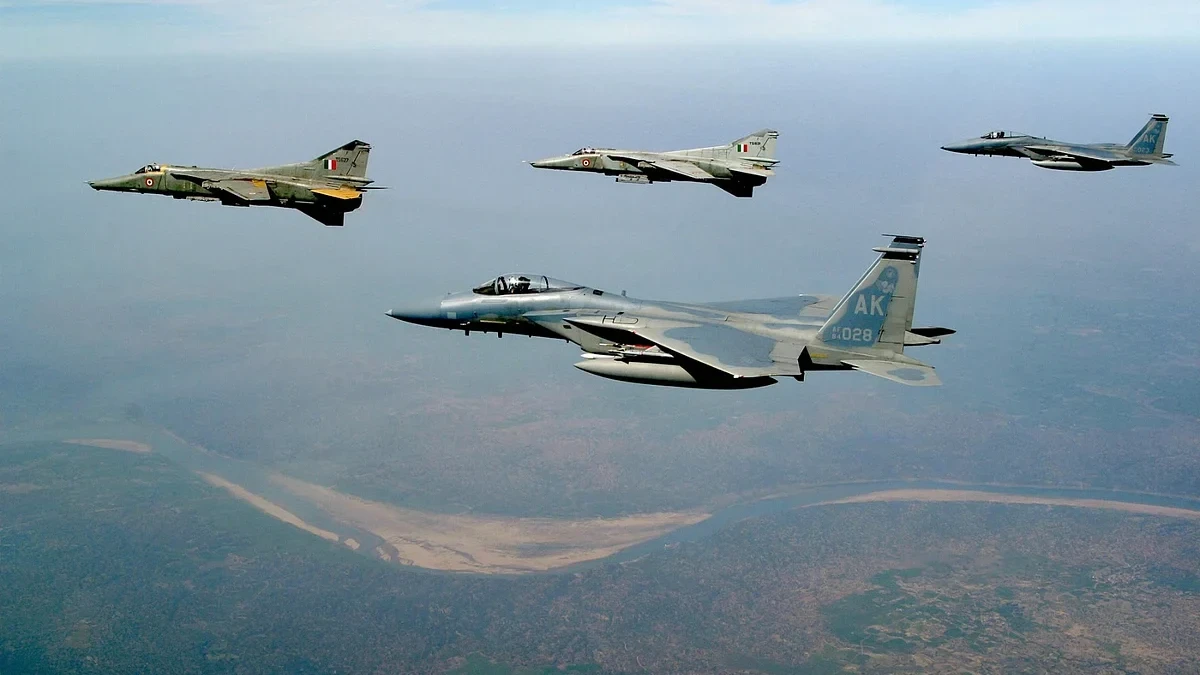
The skies above Sivasagar's historic Joysagar Tank recently witnessed a significant aerial combat drill conducted by the Indian Air Force (IAF). This exercise formed a crucial part of the IAF's continuous efforts to enhance its operational capabilities and ensure the readiness of its personnel and aircraft, reinforcing India's defense posture in the strategically vital Northeast region.
Such aerial combat drills are vital for simulating real-world conflict scenarios, allowing pilots to hone their tactical skills, test advanced maneuvers, and integrate various aircraft systems in a controlled environment. These exercises are not merely about displaying aerial prowess but are rigorous training sessions designed to improve coordination among different squadrons and ground support units, which is paramount for effective defense operations. They provide invaluable opportunities for aircrews to practice complex formations, engage in mock dogfights, and execute precision strikes, all under the watchful eyes of experienced instructors.
While specific details regarding the types of aircraft involved or the exact nature of the tactical objectives are typically not disclosed for security reasons, these training sessions are a standard and essential practice for air forces worldwide. They play a critical role in evaluating and refining the combat preparedness of aircrews, ensuring they are equipped to respond swiftly and effectively to any contingency that may arise along the nation's borders or within its airspace.
The choice of location, Sivasagar, situated in the strategically sensitive Northeast region, further underscores the IAF's focus on maintaining a strong and vigilant presence across India's diverse geographical landscapes. Regular exercises like this send a clear message about the nation's commitment to safeguarding its airspace and borders through rigorous training, continuous skill development, and the modernization of its defense assets. Such proactive measures are fundamental to ensuring national security and regional stability.
Continue Reading