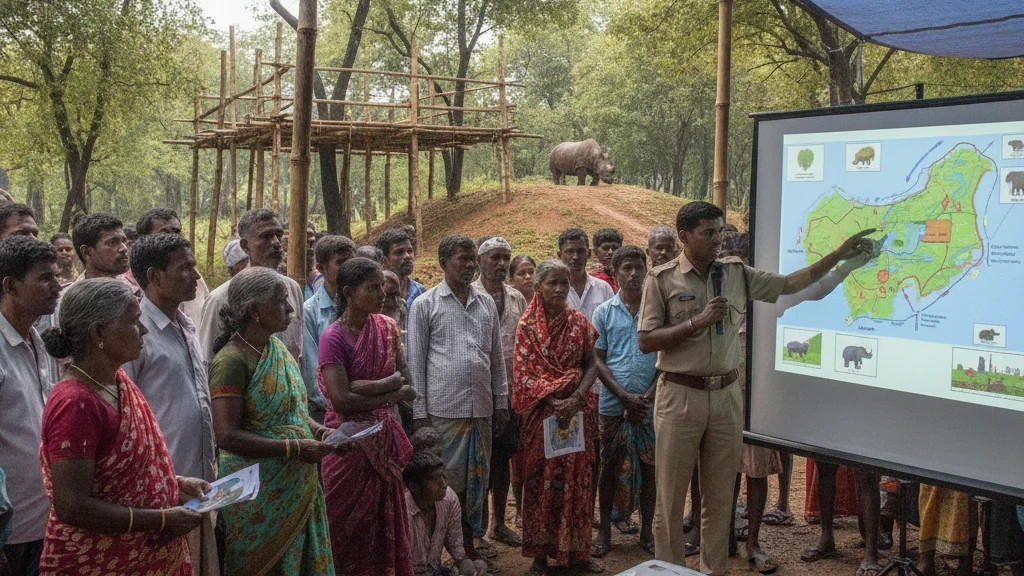
In a proactive initiative to mitigate the devastating impact of annual floods, a comprehensive awareness program was recently organised in the areas surrounding Kaziranga National Park. The drive focused on equipping local residents with essential knowledge and strategies to protect both human lives and the park's invaluable wildlife during the impending monsoon season.
Assam, particularly the low-lying regions adjacent to its major rivers, is notoriously susceptible to severe flooding each year. Kaziranga, a UNESCO World Heritage Site renowned for its one-horned rhinoceros population, faces significant challenges as rising waters displace animals, often forcing them to cross national highways in search of higher ground, leading to increased vulnerability and sometimes casualties. Simultaneously, human settlements bordering the park endure immense hardship, including displacement, damage to property, and loss of livelihoods.
Officials involved in the program underscored the critical importance of community participation in disaster preparedness. The sessions reportedly covered various aspects, including early warning systems, safe evacuation procedures for humans, and strategies to assist wildlife distressed by floods. Emphasis was placed on creating a collaborative framework between local administrations, forest department personnel, and villagers to ensure a coordinated response when floodwaters inevitably rise.
Such initiatives are deemed crucial for building resilience in a region where floods are a recurring natural phenomenon. By fostering greater awareness and preparedness, authorities aim to minimise human-wildlife conflict during flood events and ensure the continued safety and well-being of both the people and the iconic biodiversity that defines Kaziranga.
Continue Reading