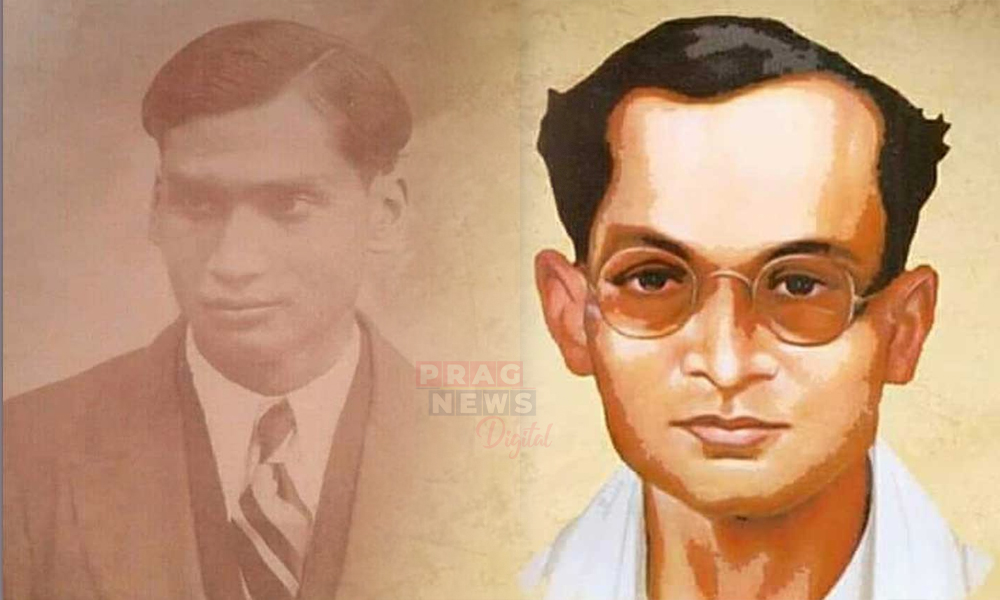
Agarwala is widely regarded as the father of Assamese cinema
Digital Desk: Assam today observes Silpi Divas (Artists’ Day), commemorating the death anniversary of legendary cultural icon Rupkonwar Jyoti Prasad Agarwala, who passed away on 17th January , 1951. The day is marked across the state with cultural programmes, remembrance events, and tributes celebrating his immense contribution to Assamese art, culture, and the freedom movement.
Born in 1903 at Tamulbari in Assam, Jyoti Prasad Agarwala was a multifaceted genius revered as a poet, playwright, songwriter, filmmaker, and freedom fighter. Fondly known as “Rupkonwar,” meaning the Jewel of Artists, he played a pioneering role in shaping the cultural and artistic identity of Assam.
Agarwala is widely regarded as the father of Assamese cinema. He directed Joymoti (1935), the first Assamese film, which portrayed the life and sacrifice of Ahom princess Sati Joymoti. His second film, Indramalati (1939), further enriched Assamese cinema and featured a young Dr. Bhupen Hazarika. Beyond filmmaking, Agarwala composed over 300 songs, popularly known as Jyoti Xongit, and made significant contributions to Assamese literature through his plays and poetry.
Deeply involved in India’s freedom struggle, Agarwala faced imprisonment during the British era in the 1930s. His artistic vision and nationalist ideals left a lasting imprint on Assamese society.
As part of Silpi Divas celebrations today, a grand cultural programme is being held at Sarusajai Stadium in Guwahati, where around 10,000 artistes will perform the traditional Bodo folk dance, Bagurumba. The event, titled “Bagurumba Daho,” is scheduled to begin at 6 pm this evening.
Prime Minister Narendra Modi is expected to attend the programme, adding to the significance of the occasion. The large-scale preparations and rehearsals at the venue reflect the enthusiasm and reverence with which Assam continues to honour the legacy of Rupkonwar Jyoti Prasad Agarwala.
Continue Reading