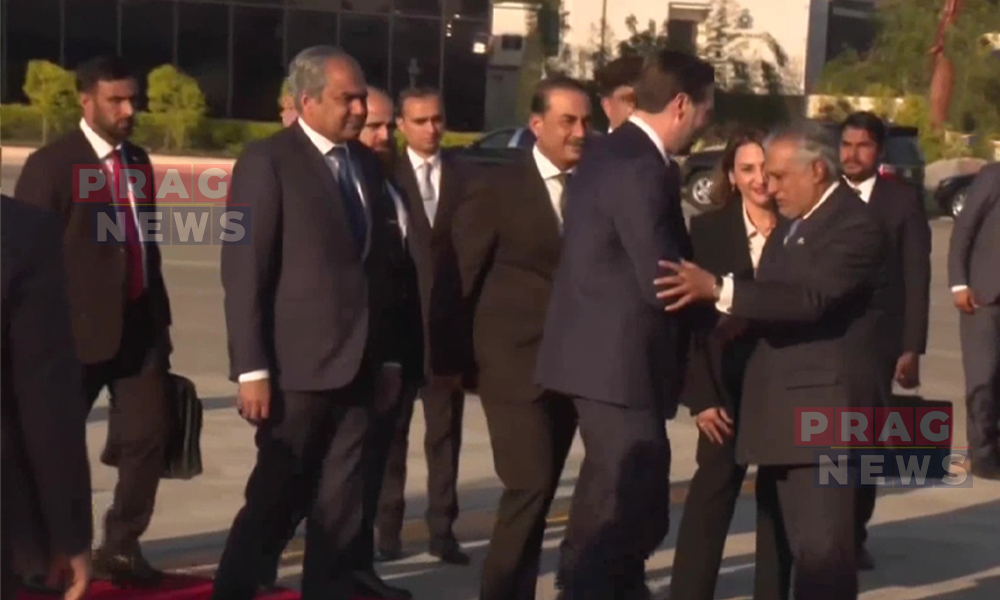
Security in Islamabad was significantly heightened during the talks, with thousands of paramilitary personnel and army troops deployed across the city
Digital Desk: Today, JD Vance departed from Islamabad after the United States and Iran failed to reach an agreement following nearly 21 hours of intense negotiations.
Addressing a press conference, Vance acknowledged the breakdown in talks, stating that Iran had declined to accept key American conditions, particularly commitments related to halting the development of nuclear weapons.
“The bad news is that we have not reached an agreement, and I think that’s bad news for Iran much more than it’s bad news for the United States of America,” he said.
Vance added that the US had clearly outlined its “red lines,” emphasising that Iran must make a firm commitment not to pursue nuclear weapons or the capability to develop them rapidly. He also revealed that he held multiple discussions with Donald Trump during the negotiations, with nuclear development emerging as a major point of contention.
Iran’s semi-official Tasnim news agency reported that “excessive” US demands had obstructed progress, ultimately leading to the collapse of the talks. However, Iranian authorities indicated that discussions may continue, with technical experts from both sides expected to exchange documents in the coming days.
The high-stakes meeting marked the first direct engagement between the US and Iran in over a decade and the most significant since the 1979 Islamic Revolution. The outcome holds major implications for regional stability, including the fragile two-week ceasefire and the potential reopening of the strategically crucial Strait of Hormuz, a vital route for nearly 20% of global energy supplies.
The ongoing conflict has already driven global oil prices higher and resulted in significant loss of life. Tensions remain high as both sides continue to differ on key demands. While Iran is reportedly seeking control over the Strait of Hormuz, war reparations, and broader ceasefire arrangements across the region, the US insists on ensuring free passage for global shipping and curbing Iran’s nuclear enrichment programme.
The negotiations, mediated by Pakistan, also saw participation from senior US officials, including envoy Steve Witkoff and Jared Kushner, who met with Iranian leaders such as parliamentary speaker Mohammad Baqer Qalibaf and foreign minister Abbas Araqchi.
Security in Islamabad was significantly heightened during the talks, with thousands of paramilitary personnel and army troops deployed across the city. Meanwhile, conflicting claims emerged over military movements in the Strait of Hormuz, with the US stating that naval operations were underway, while Iranian state media denied any such activity.
Despite the deadlock, diplomatic channels remain open, with both sides signalling the possibility of further engagement in the near future.
Continue Reading